若您需要咨询产品或有任何技术问题,请通过官方电话 400 885 9050 或邮箱 info.cn@stemcell.com 与我们联系。

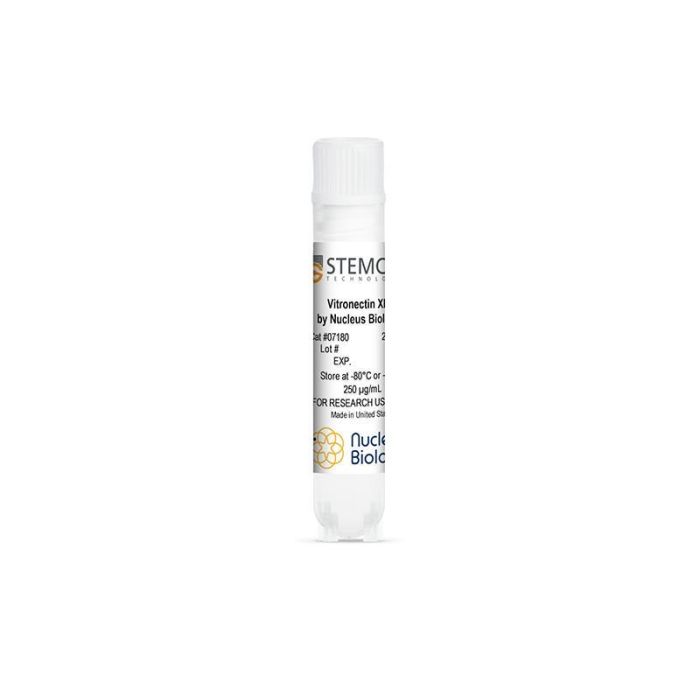
Vitronectin XF™

成分明确的无异源基质,支持人多能干细胞在无血清、无饲养层条件下的生长和分化。
只有 %1
¥1,116.00

产品号 #(选择产品)

产品号 #07180_C

成分明确的无异源基质,支持人多能干细胞在无血清、无饲养层条件下的生长和分化

产品优势

  • 采用重组人源蛋白基质,减少实验中的可变因素
  • 可在室温下操作,不会发生基质凝胶
  • 可与任意 TeSR™ 系列培养基联合使用以维持hPSCs
  • 搭配 TeSR™-E8™ 或 TeSR™-AOF 培养基使用,可构建完全无异种来源的培养体系
专为您的实验方案打造的产品
要查看实验方案所需的所有配套产品,请参阅《实验方案与技术文档》

总览

使用Vitronectin XF™(一种成分确定且无异源成分的细胞培养基质)支持人多能干细胞的生长和分化。

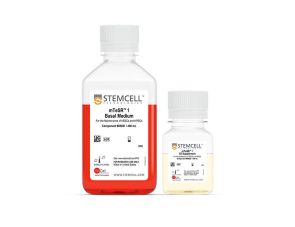
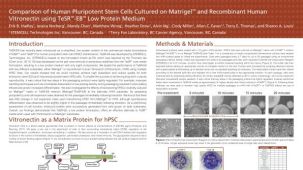
Vitronectin XF™由Nucleus Biologics开发和制造,是康宁Matrigel®的有效替代品。将Vitronectin XF™与mTeSR™1, mTeSR™ Plus, TeSR™-E8™,或TeSR™-AOF联合使用,为在无饲养层条件下维持人胚胎干细胞(ES)和人诱导多能干细胞(iPS)提供一个明确的培养系统。该系统实现了对培养环境的完全控制,从而获得更稳定的细胞群体,并在后续应用中确保结果的可重复性。

注意:CellAdhere™稀释缓冲液和非组织培养处理的培养器皿(例如产品号#100-0096/27147)需要与Vitronectin XF™一起使用,可单独购买。

细胞类型
内胚层,PSC衍生,多能干细胞
 
种属


实验数据

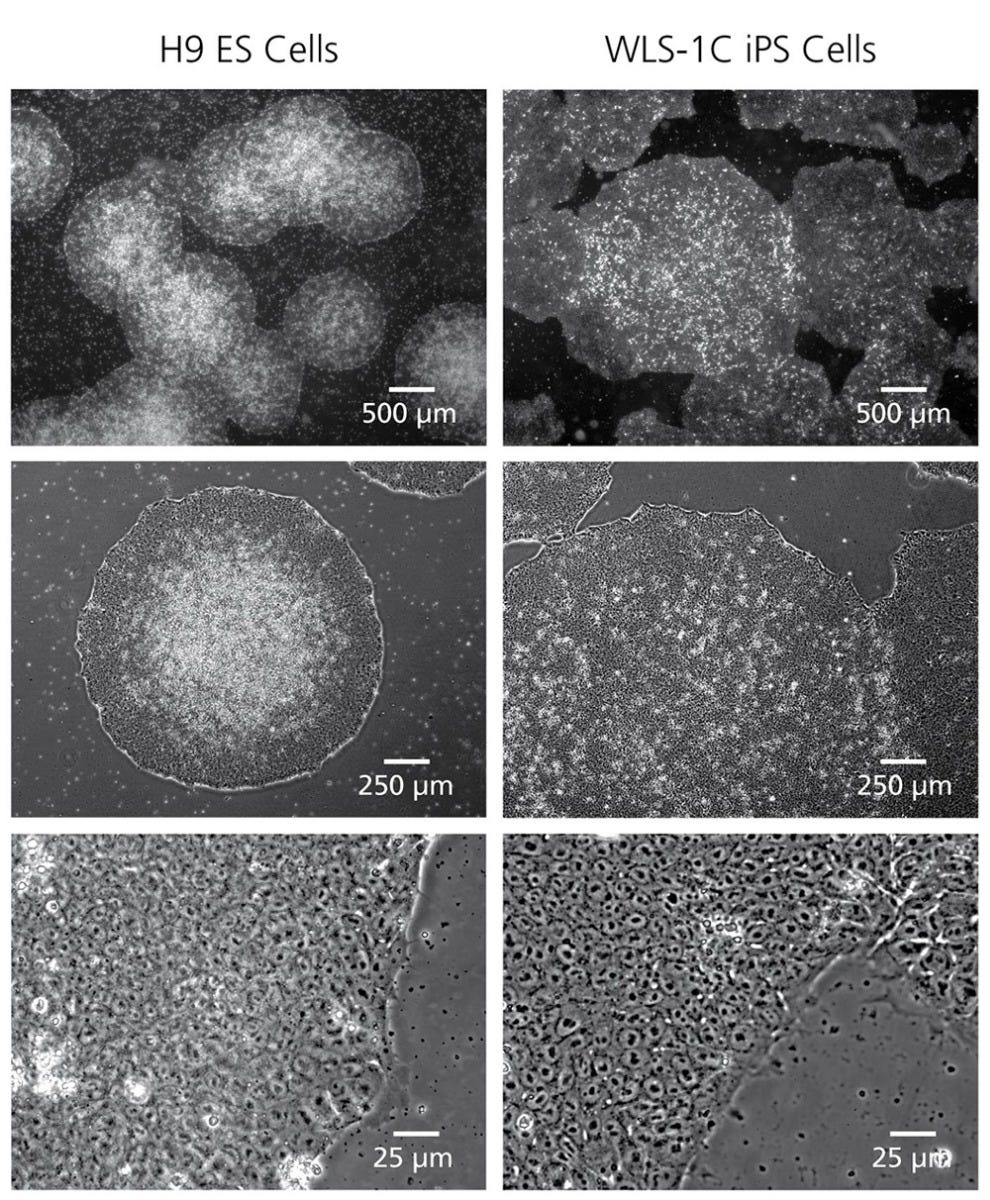
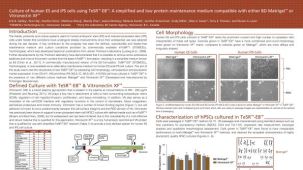
Figure 1. Morphology of Human ES and iPS Cells Cultured on Vitronectin XF™ Cell Culture Matrix in TeSR™-E8™

Undifferentiated human ES (H9) and iPS (WLS-1C) cell cultures exhibit normal morphology when cultured on Vitronectin XF™. Colonies are round, tightly packed and multilayered, with a high nucleus-to-cytoplasm ratio. Cells were transferred directly from Matrigel® hESC-Qualified Matrix without an adaptation step. Note: Colonies grown in TeSR™-E8™ have a more condensed and round morphology when grown on Vitronectin XF™ matrix, compared to colonies grown on Matrigel® hESC-Qualified Matrix, which are more diffuse and irregularly shaped.

产品说明书及文档

请在《产品说明书》中查找相关支持信息和使用说明,或浏览下方更多实验方案。

Document Type
Product Name
Catalog #
Lot #
Language
Product Name
Vitronectin XF™
Catalog #
100-0763, 07180
Lot #
All
Language
English
Document Type
Safety Data Sheet
Product Name
Vitronectin XF™
Catalog #
100-0763, 07180
Lot #
All
Language
English

应用领域

本产品专为以下研究领域设计,适用于工作流程中的高亮阶段。探索这些工作流程,了解更多我们为各研究领域提供的其他配套产品。

相关材料与文献

技术资料 (14)

文献 (4)

Roles of integrins in human induced pluripotent stem cell growth on Matrigel and vitronectin. Rowland TJ et al. Stem cells and development 2010 AUG

Abstract

Human induced pluripotent stem cells (iPSCs) hold promise as a source of adult-derived,patient-specific pluripotent cells for use in cell-based regenerative therapies. However,current methods of cell culture are tedious and expensive,and the mechanisms underlying cell proliferation are not understood. In this study,we investigated expression and function of iPSC integrin extracellular matrix receptors to better understand the molecular mechanisms of cell adhesion,survival,and proliferation. We show that iPSC lines generated using Oct-3/4,Sox-2,Nanog,and Lin-28 express a repertoire of integrins similar to that of hESCs,with prominent expression of subunits alpha5,alpha6,alphav,beta1,and beta5. Integrin function was investigated in iPSCs cultured without feeder layers on Matrigel or vitronectin,in comparison to human embryonic stem cells. beta1 integrins were required for adhesion and proliferation on Matrigel,as shown by immunological blockade experiments. On vitronectin,the integrin alphavbeta5 was required for initial attachment,but inhibition of both alphavbeta5 and beta1 was required to significantly decrease iPSC proliferation. Furthermore,iPSCs cultured on vitronectin for 9 passages retained normal karyotype,pluripotency marker expression,and capacity to differentiate in vitro. These studies suggest that vitronectin,or derivatives thereof,might substitute for Matrigel in a more defined system for iPSC culture.
Chemically defined conditions for human iPSC derivation and culture. Chen G et al. Nature methods 2011 MAY

Abstract

We re-examine the individual components for human embryonic stem cell (ESC) and induced pluripotent stem cell (iPSC) culture and formulate a cell culture system in which all protein reagents for liquid media,attachment surfaces and splitting are chemically defined. A major improvement is the lack of a serum albumin component,as variations in either animal- or human-sourced albumin batches have previously plagued human ESC and iPSC culture with inconsistencies. Using this new medium (E8) and vitronectin-coated surfaces,we demonstrate improved derivation efficiencies of vector-free human iPSCs with an episomal approach. This simplified E8 medium should facilitate both the research use and clinical applications of human ESCs and iPSCs and their derivatives,and should be applicable to other reprogramming methods.
Non-integrating episomal plasmid-based reprogramming of human amniotic fluid stem cells into induced pluripotent stem cells in chemically defined conditions. Slamecka J et al. Cell cycle (Georgetown,Tex.) 2016 JAN

Abstract

Amniotic fluid stem cells (AFSC) represent an attractive potential cell source for fetal and pediatric cell-based therapies. However,upgrading them to pluripotency confers refractoriness toward senescence,higher proliferation rate and unlimited differentiation potential. AFSC were observed to rapidly and efficiently reacquire pluripotency which together with their easy recovery makes them an attractive cell source for reprogramming. The reprogramming process as well as the resulting iPSC epigenome could potentially benefit from the unspecialized nature of AFSC. iPSC derived from AFSC also have potential in disease modeling,such as Down syndrome or $\$-thalassemia. Previous experiments involving AFSC reprogramming have largely relied on integrative vector transgene delivery and undefined serum-containing,feeder-dependent culture. Here,we describe non-integrative oriP/EBNA-1 episomal plasmid-based reprogramming of AFSC into iPSC and culture in fully chemically defined xeno-free conditions represented by vitronectin coating and E8 medium,a system that we found uniquely suited for this purpose. The derived AF-iPSC lines uniformly expressed a set of pluripotency markers Oct3/4,Nanog,Sox2,SSEA-1,SSEA-4,TRA-1-60,TRA-1-81 in a pattern typical for human primed PSC. Additionally,the cells formed teratomas,and were deemed pluripotent by PluriTest,a global expression microarray-based in-silico pluripotency assay. However,we found that the PluriTest scores were borderline,indicating a unique pluripotent signature in the defined condition. In the light of potential future clinical translation of iPSC technology,non-integrating reprogramming and chemically defined culture are more acceptable.

更多信息

更多信息
物种
法律声明:

Vitronectin XF is developed and manufactured by Nucleus Biologics, and Vitronectin XF™ is a trademark of Nucleus Biologics. 质量保证:

产品仅供研究使用,不用于针对人或动物的诊断或治疗。 欲获悉更多关于STEMCELL的质控信息,请访问 STEMCELL.CN/COMPLIANCE.
Copyright © 2026 by STEMCELL Technologies. All rights reserved.

在线联系