若您需要咨询产品或有任何技术问题,请通过官方电话 400 885 9050 或邮箱 info.cn@stemcell.com 与我们联系。

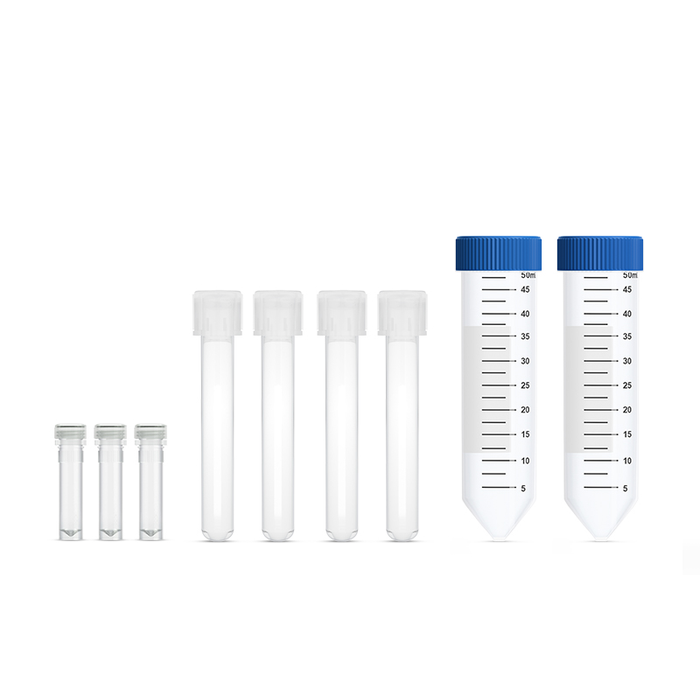
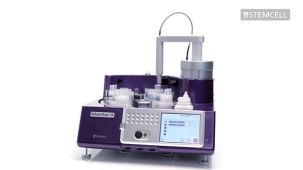
RoboSep™分选管套装

RoboSep™分选管套装(9个塑料管)
只有 %1
¥160.00

产品号 #(选择产品)

产品号 #20155_C

RoboSep™分选管套装(9个塑料管)

专为您的实验方案打造的产品
要查看实验方案所需的所有配套产品,请参阅《实验方案与技术文档》

What Our Product Specialist Says

Cell isolation can be time-consuming and laborious when working with multiple samples. We developed RoboSep™ to automate this process and reduce hands-on time—to help you move your research forward.

Jo GromadzkiSenior Manager, Product Maintenance
Jo Gromadzki, Senior Manager

总览

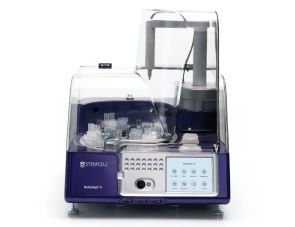
RoboSep™分选管套装是一种辅助产品RoboSep™- s仪器。

如需了解RoboSep™全自动细胞分选的更多信息,请参阅我们的RoboSep™概述.

应用
细胞分选
 
品牌
RoboSep
 
研究领域
嵌合体,HLA,免疫,干细胞生物学
 

产品说明书及文档

请在《产品说明书》中查找相关支持信息和使用说明,或浏览下方更多实验方案。

Document Type
Product Name
Catalog #
Lot #
Language
Document Type
Technical Manual
Catalog #
20155
Lot #
All
Language
English

应用领域

本产品专为以下研究领域设计,适用于工作流程中的高亮阶段。探索这些工作流程,了解更多我们为各研究领域提供的其他配套产品。

相关材料与文献

技术资料 (29)

技术手册
技术手册

文献 (63)

Thymoglobulin targets multiple plasma cell antigens and has in vitro and in vivo activity in multiple myeloma. Timm MM et al. Leukemia 2006 OCT

Abstract

Multiple myeloma is characterized by the proliferation of clonal plasma cells that have a heterogeneous expression of various cell surface markers,precluding successful use of monoclonal antibodies for therapeutic targeting of the tumor cell. Thymoglobulin (rabbit-derived polyclonal anti-thymocyte globulin),by virtue of its method of preparation,contains antibodies against several B-cell and plasma cell antigens and offers an attractive option for immunotherapy of myeloma. Here,we demonstrate potent anti-myeloma activity of the rabbit anti-thymocyte globulin preparation Thymoglobulin in vitro and in vivo in an animal model of myeloma. Thymoglobulin was able to induce dose- and time-dependent apoptosis of several myeloma cell lines,including those resistant to conventional anti-myeloma agents. Importantly,the anti-myeloma activity was preserved even when myeloma cells were grown with different cytokines demonstrating the ability to overcome microenvironment-mediated resistance. Thymoglobulin induced apoptosis of freshly isolated primary myeloma cells from patients. Using a competitive flow cytometric analysis,we were able to identify the potential antigen targets for Thymoglobulin preparation. Finally,in a plasmacytoma mouse model of myeloma,Thymoglobulin delayed the tumor growth in a dose-dependent manner providing convincing evidence for continued evaluation of this agent in the clinic in patients with myeloma,either alone or in combination with other agents.
Chaetocin: a promising new antimyeloma agent with in vitro and in vivo activity mediated via imposition of oxidative stress. Isham CR et al. Blood 2007 MAR

Abstract

Chaetocin,a thiodioxopiperazine natural product previously unreported to have anticancer effects,was found to have potent antimyeloma activity in IL-6-dependent and -independent myeloma cell lines in freshly collected sorted and unsorted patient CD138(+) myeloma cells and in vivo. Chaetocin largely spares matched normal CD138(-) patient bone marrow leukocytes,normal B cells,and neoplastic B-CLL (chronic lymphocytic leukemia) cells,indicating a high degree of selectivity even in closely lineage-related B cells. Furthermore,chaetocin displays superior ex vivo antimyeloma activity and selectivity than doxorubicin and dexamethasone,and dexamethasone- or doxorubicin-resistant myeloma cell lines are largely non-cross-resistant to chaetocin. Mechanistically,chaetocin is dramatically accumulated in cancer cells via a process inhibited by glutathione and requiring intact/unreduced disulfides for uptake. Once inside the cell,its anticancer activity appears mediated primarily through the imposition of oxidative stress and consequent apoptosis induction. Moreover,the selective antimyeloma effects of chaetocin appear not to reflect differential intracellular accumulation of chaetocin but,instead,heightened sensitivity of myeloma cells to the cytotoxic effects of imposed oxidative stress. Considered collectively,chaetocin appears to represent a promising agent for further study as a potential antimyeloma therapeutic.
17beta-estradiol downregulates interferon regulatory factor-1 in murine splenocytes. Lengi AJ et al. Journal of molecular endocrinology 2006 DEC

Abstract

Interferon regulatory factor-1 (IRF-1) is an important transcription factor that mediates interferon-gamma (IFN-gamma)-induced cell-signaling events. In this study,we examined whether 17beta-estradiol alters IRF-1 in splenic lymphocytes,in view of the immunomodulatory effects of this natural female sex hormone including its ability to alter IFN-gamma levels. We find that IRF-1 expression is markedly downregulated in splenocytes or purified T-cells from estrogen-treated mice at all time points studied when compared with their placebo counterparts. This decrease in IRF-1 in splenocytes from estrogen-treated mice is neither due to upregulation of IRF-1-interfering proteins (nucleophosmin or signal transducer and activator of transcription (STAT)-5) nor due to alternatively spliced IRF-1 mRNA. Given that IFN-gamma is a potent inducer of IRF-1,direct addition of recombinant IFN-gamma to splenocytes from either wild-type or IFN-gamma-knockout mice,or the addition of recombinant IFN-gamma to purified T-cells,was expected to stimulate IRF-1 expression. However,robust expression of IRF-1 in cells from estrogen-treated mice was not seen,unlike what was observed in cells from placebo-treated mice. Diminished IFN-gamma induction of IRF-1 in cells from estrogen-treated mice was noticed despite comparable phosphorylated STAT-1 activation. These studies are the first to show that estrogen regulates IFN-gamma-inducible IRF-1 in lymphoid cells,a finding that may have implications to IFN-gamma-regulated immune and vascular diseases.
质量保证:

产品仅供研究使用,不用于针对人或动物的诊断或治疗。 欲获悉更多关于STEMCELL的质控信息,请访问 STEMCELL.CN/COMPLIANCE.
Copyright © 2026 by STEMCELL Technologies. All rights reserved.

在线联系