若您需要咨询产品或有任何技术问题,请通过官方电话 400 885 9050 或邮箱 info.cn@stemcell.com 与我们联系。

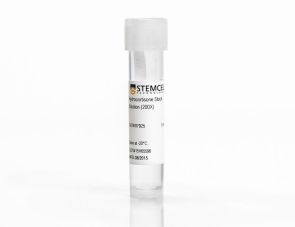
PneumaCult™-Ex 培养基

用于扩增原代人呼吸道上皮细胞的无血清和无BPE培养基
只有 %1
¥2,574.00

产品号 #(选择产品)

产品号 #05008_C

用于扩增原代人呼吸道上皮细胞的无血清和无BPE培养基

产品优势

  • PneumaCult™-Ex是一款成份明确、无BPE的培养基,可为HBECs的扩增提供稳定一致的培养效果;
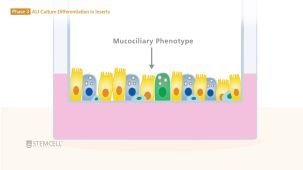
  • 当PneumaCult™-Ex和PneumaCult™-ALI一起使用时,可构成了一个完整的细胞培养体系,用于扩增原代人气道细胞并随后分化为具有黏液纤毛结构的假复层上皮。

产品组分包括

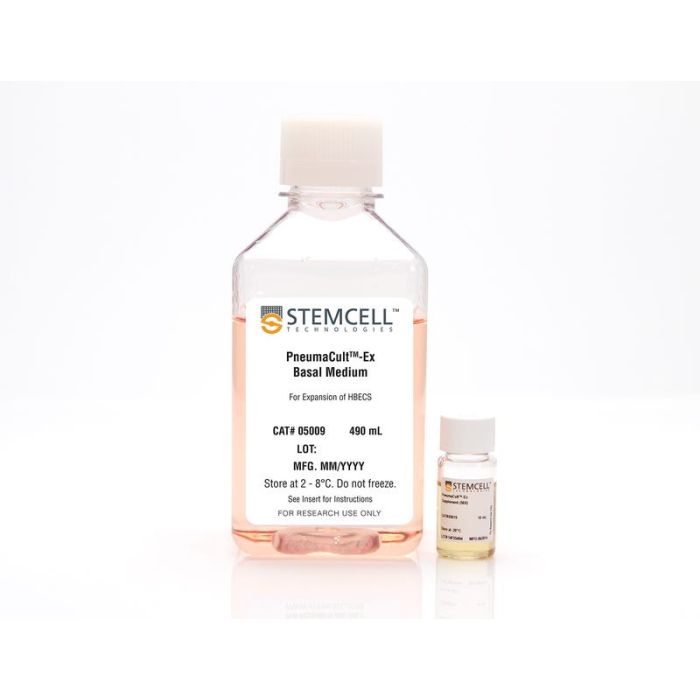
  • PneumaCult™-Ex基础培养基,490mL
  • PneumaCult™-Ex 50X 添加物, 10 mL
Interested in trying STEMCELL's products for respiratory research? Fill out this form to request information about introductory offers.

总览

PneumaCult™- Ex是一款成份明确的,不含血清和BPE的细胞培养基,支持人呼吸道上皮细胞的快速扩增。使用PneumaCult™-Ex培养的原代呼吸道上皮细胞在至少3代内迅速扩增,同时保持鹅卵石状形态和基底细胞标记物p63和p75NTR的均匀表达。此外,这些细胞在 PneumaCult™-ALI 的气-液界面条件下可进一步分化,形成具黏液纤毛特征的假复层上皮结构。

PneumaCult™-ALI Medium和PneumaCult™-Ex Plus Medium(产品号:#05040)构成了一个完整、无BPE的人源呼吸道上皮体外建模系统,也与原代人鼻上皮细胞兼容。这一稳定、定义明确的培养系统是开展基础呼吸研究、毒理学研究和药物开发的宝贵工具。

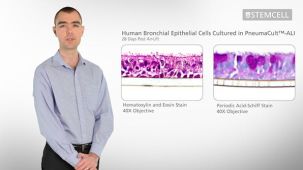
欢迎观看我们的肺部研究课程,了解如何在 ALI 条件下培养人呼吸道上皮细胞,或浏览我们的常见问题解答(FAQs)关于使用PneumaCult™的ALI培养工作流程。

分类
专用培养基
 
细胞类型
气道细胞
 
种属

 
应用
细胞培养,扩增,培养
 
品牌
PneumaCult
 
研究领域
上皮细胞研究
 
制剂类别
无血清
 

实验数据

HBECs Cultured in PneumaCult™-Ex Exhibit Cobblestone Morphology

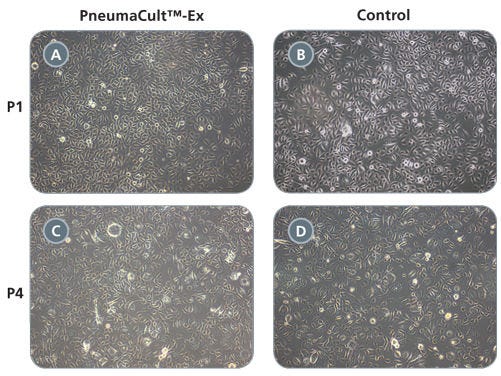
Figure 1. HBECs Cultured in PneumaCult™-Ex Exhibit Cobblestone Morphology

Commercially available, cryopreserved, passage 1 (P1) HBECs were seeded into PneumaCult™-Ex or a Control medium (BEGM™, Lonza). Cells exhibit cobblestone morphology in both culture media, as seen in representative images of confluent cultures 5 days post-seeding (A,B). HBECs cultured for an additional 3 passages in both PneumaCult™-Ex and Control medium continue to expand and retain their normal cobblestone morphology, as shown by representative images of confluent P4 cultures at 7 days post-seeding (C,D). All images were taken through 10X objective.

HBECs Cultured in PneumaCult™-Ex Exhibit Uniform Expression of Basal Cell Markers

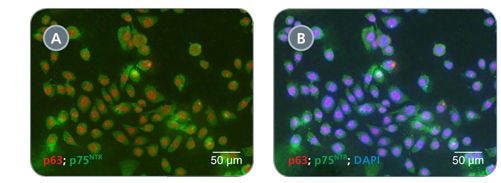
Figure 2. HBECs Cultured in PneumaCult™-Ex Exhibit Uniform Expression of Basal Cell Markers

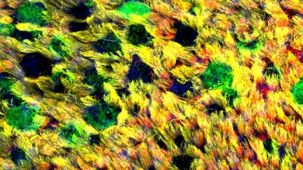
Passage 3 HBECs cultured in PneumaCult™-Ex demonstrate extensive co-labeling of the basal cell markers p63 (red) and p75NTR (green, A). A representative merged image indicates widespread co-labeling of p63, p75NTR and the nuclear stain DAPI (blue, B).

HBECs Cultured in PneumaCult™-Ex Exhibit Comparable Expansion Rates to Cells Cultured in Control Medium

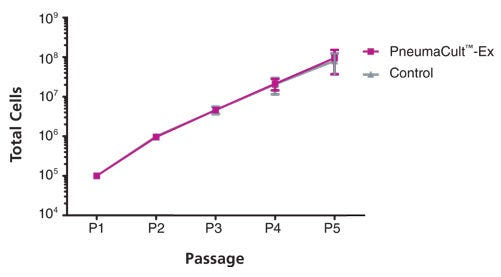
Figure 3. HBECs Cultured in PneumaCult™-Ex Exhibit Comparable Expansion Rates to Cells Cultured in Control Medium

Commercially available, cryopreserved, P1 HBECs were seeded into PneumaCult™-Ex or a Control medium (BEGM™, Lonza). In seven independent donor samples, the average fold expansion over four passages was not significantly different between cells cultured in PneumaCult™-Ex and cells cultured in the Control medium (7.1 ± 1.4 vs. 7.2 ± 1.9, mean ± SD, n = 7, p = 0.9 in paired t-test).

产品说明书及文档

请在《产品说明书》中查找相关支持信息和使用说明,或浏览下方更多实验方案。

Document Type
Product Name
Catalog #
Lot #
Language
Catalog #
05008
Lot #
All
Language
English
Document Type
Safety Data Sheet 1
Catalog #
05008
Lot #
All
Language
English
Document Type
Safety Data Sheet 2
Catalog #
05008
Lot #
All
Language
English

应用领域

本产品专为以下研究领域设计,适用于工作流程中的高亮阶段。探索这些工作流程,了解更多我们为各研究领域提供的其他配套产品。

相关材料与文献

技术资料 (12)

文献 (16)

Staphylococcus aureus impairs the airway epithelial barrier in vitro. Malik Z et al. International forum of allergy & rhinology 2015 JUN

Abstract

BACKGROUND: Chronic rhinosinusitis (CRS) is a cluster of disorders that result in sinonasal mucosal inflammation. Staphylococcus aureus (S. aureus) is associated with severe and recalcitrant CRS. The purpose of our study was to investigate the effect of S. aureus on respiratory epithelial barrier structure and function. METHODS: Conditioned media from S. aureus reference strains (American Type Culture Collection [ATCC] 13565,14458,and 25923) was applied to air-liquid interface (ALI) cultures of primary human nasal epithelial cells (HNECs) and transepithelial electrical resistance (TEER) was measured to assess cell-to-cell integrity. Electron microscopy was used to gauge the ciliated area and tight junctions (TJs). Additionally,the expression of the TJ protein zona occludens-1 (ZO-1) was examined via immunofluorescence. Statistical analysis was performed using analysis of variance (ANOVA) with pairwise Bonferroni-adjusted t tests. RESULTS: Secreted products applied to ALI cultures from S. aureus strain 13565 caused a concentration-dependent decline in electrical impedance compared to controls and reference strains 14458 and 25923 (p textless 0.001). Electron microscopy showed a distinct separation between adjacent cells apically,in the region of TJs. The ciliated area was not affected; however,ZO-1 expression became discontinuous in HNECs exposed to the 13565 strain's conditioned media. CONCLUSION: Conditioned media of the S. aureus strain 13565 damages the airway epithelium by disrupting the TJs between primary HNECs grown at an ALI. These findings suggest that strain-specific S. aureus-secreted product(s) compromise epithelial barrier function,which may constitute 1 of the roles played by S. aureus in the pathophysiology of recalcitrant CRS. Further research is required to uncover the relevant molecular mechanisms.
Multiciliated cell basal bodies align in stereotypical patterns coordinated by the apical cytoskeleton Herawati E et al. Journal of Cell Biology 2016

Abstract

Multiciliated cells (MCCs) promote fluid flow through coordinated ciliary beating,which requires properly organized basal bodies (BBs). Airway MCCs have large numbers of BBs,which are uniformly oriented and,as we show here,align linearly. The mechanism for BB alignment is unexplored. To study this mechanism,we developed a long-term and high-resolution live-imaging system and used it to observe green fluorescent protein"centrin2"labeled BBs in cultured mouse tracheal MCCs. During MCC differentiation,the BB array adopted four stereotypical patterns,from a clustering floret? pattern to the linear alignment.? This alignment process was correlated with BB orientations,revealed by double immunostaining for BBs and their asymmetrically associated basal feet (BF). The BB alignment was disrupted by disturbing apical microtubules with nocodazole and by a BF-depleting Odf2 mutation. We constructed a theoretical model,which indicated that the apical cytoskeleton,acting like a viscoelastic fluid,provides a self-organizing mechanism in tracheal MCCs to align BBs linearly for mucociliary transport.
Novel flow cytometry approach to identify bronchial epithelial cells from healthy human airways. Maestre-Batlle D et al. Scientific reports 2017 FEB

Abstract

Sampling various compartments within the lower airways to examine human bronchial epithelial cells (HBEC) is essential for understanding numerous lung diseases. Conventional methods to identify HBEC in bronchoalveolar lavage (BAL) and wash (BW) have throughput limitations in terms of efficiency and ensuring adequate cell numbers for quantification. Flow cytometry can provide high-throughput quantification of cell number and function in BAL and BW samples,while requiring low cell numbers. To date,a flow cytometric method to identify HBEC recovered from lower human airway samples is unavailable. In this study we present a flow cytometric method identifying HBEC as CD45 negative,EpCAM/pan-cytokeratin (pan-CK) double-positive population after excluding debris,doublets and dead cells from the analysis. For validation,the HBEC panel was applied to primary HBEC resulting in 98.6% of live cells. In healthy volunteers,HBEC recovered from BAL (2.3% of live cells),BW (32.5%) and bronchial brushing samples (88.9%) correlated significantly (p = 0.0001) with the manual microscopy counts with an overall Pearson correlation of 0.96 across the three sample types. We therefore have developed,validated,and applied a flow cytometric method that will be useful to interrogate the role of the respiratory epithelium in multiple lung diseases.

更多信息

更多信息
物种
配方 无血清
质量保证:

产品仅供研究使用,不用于针对人或动物的诊断或治疗。 欲获悉更多关于STEMCELL的质控信息,请访问 STEMCELL.CN/COMPLIANCE.
Copyright © 2026 by STEMCELL Technologies. All rights reserved.

在线联系