若您需要咨询产品或有任何技术问题,请通过官方电话 400 885 9050 或邮箱 info.cn@stemcell.com 与我们联系。

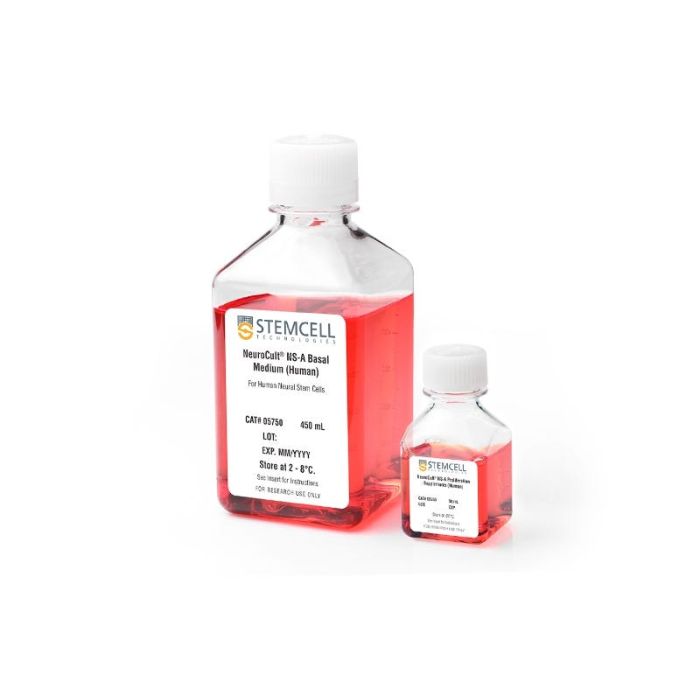
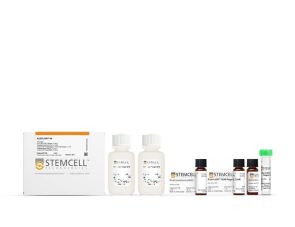
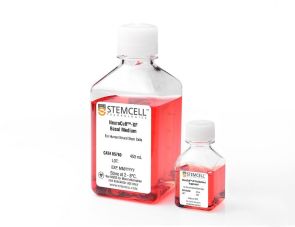
NeuroCult™ NS-A 扩增试剂盒(人)

培养人神经干细胞和祖细胞的培养基
只有 %1
¥3,512.00

产品号 #(选择产品)

产品号 #05751_C

培养人神经干细胞和祖细胞的培养基

产品组分包括

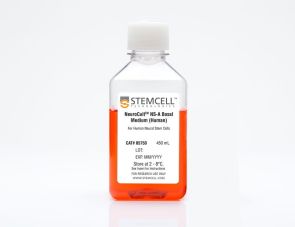
  • NeuroCult™NS-A基础培养基(人),450 mL(产品号#05750)
  • NeuroCult™ 扩增添加物(人),50 mL(产品号 #05753)
You may notice that your reagent packaging looks slightly different from images displayed here or from previous orders. Due to pandemic-related plasticware shortages, we are temporarily using alternative bottles for this product. Rest assured that the products themselves and how you should use them have not changed.
专为您的实验方案打造的产品
要查看实验方案所需的所有配套产品,请参阅《实验方案与技术文档》

总览

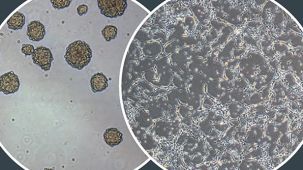
NeuroCult™ NS-A 扩增试剂盒(人)是一款标准化无血清基础培养体系,用于在神经球或贴壁单层培养系统中扩增人神经干细胞和脑肿瘤干细胞。添加适当的细胞因子后,NeuroCult™ NS-A 扩增试剂盒(人)可优化培养人神经干细胞,使其在长时间培养中保持细胞活力,且不丧失其自我更新、增殖或分化潜能。

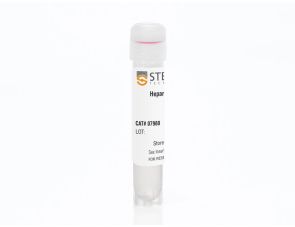
注:需添加 rh EGF(产品号 #78006)、rh bFGF(产品号 #78003)和肝素(产品号 #07980)。

分类
专用培养基
 
细胞类型
脑肿瘤干细胞,神经干/祖细胞
 
种属

 
应用
细胞培养,克隆筛选,扩增,功能学筛选,球状体培养,细胞毒性检测
 
品牌
NeuroCult
 
研究领域
癌症,药物发现和毒理检测,神经科学,干细胞生物学
 
制剂类别
无血清
 

实验数据

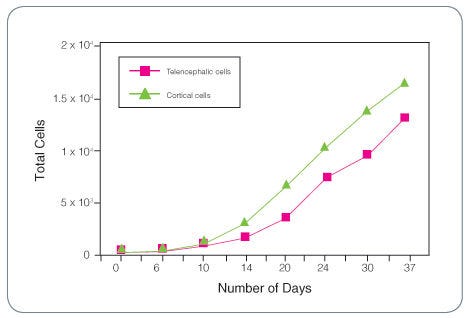
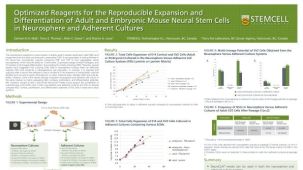
Total cell expansion for fetal human telencephalic and cortical cell neurospheres cultured with Complete NeuroCult™ Proliferation Medium (Human) containing rh EGF, rh bFGF and heparin

Figure 1. Total Cell Expansion for Fetal Human Telencephalic and Cortical Cells Cultured as Neurospheres with Complete NeuroCult™ Proliferation Medium (Human) Containing rh EGF, rh bFGF and Heparin

产品说明书及文档

请在《产品说明书》中查找相关支持信息和使用说明,或浏览下方更多实验方案。

Document Type
Product Name
Catalog #
Lot #
Language
Catalog #
05751
Lot #
All
Language
English
Document Type
Technical Manual
Catalog #
05751
Lot #
All
Language
English
Document Type
Safety Data Sheet 1
Catalog #
05751
Lot #
All
Language
English
Document Type
Safety Data Sheet 2
Catalog #
05751
Lot #
All
Language
English

应用领域

本产品专为以下研究领域设计,适用于工作流程中的高亮阶段。探索这些工作流程,了解更多我们为各研究领域提供的其他配套产品。

相关材料与文献

技术资料 (15)

文献 (113)

A t(1;19)(q10;p10) mediates the combined deletions of 1p and 19q and predicts a better prognosis of patients with oligodendroglioma. Jenkins RB et al. Cancer research 2006 OCT

Abstract

Combined deletion of chromosomes 1p and 19q is associated with improved prognosis and responsiveness to therapy in patients with anaplastic oligodendroglioma. The deletions usually involve whole chromosome arms,suggesting a t(1;19)(q10;p10). Using stem cell medium,we cultured a few tumors. Paraffin-embedded tissue was obtained from 21 Mayo Clinic patients and 98 patients enrolled in 2 North Central Cancer Treatment Group (NCCTG) low-grade glioma trials. Interphase fusion of CEP1 and 19p12 probes detected the t(1;19). 1p/19q deletions were evaluated by fluorescence in situ hybridization. Upon culture,one oligodendroglioma contained an unbalanced 45,XX,t(1;19)(q10;p10). CEP1/19p12 fusion was observed in all metaphases and 74% of interphase nuclei. Among Mayo Clinic oligodendrogliomas,the prevalence of fusion was 81%. Among NCCTG patients,CEP1/19p12 fusion prevalence was 55%,47%,and 0% among the oligodendrogliomas,mixed oligoastrocytomas,and astrocytomas,respectively. Ninety-one percent of NCCTG gliomas with 1p/19q deletion and 12% without 1p/19q deletion had CEP1/19p12 fusion (P textless 0.001,chi(2) test). The median overall survival (OS) for all patients was 8.1 years without fusion and 11.9 years with fusion (P = 0.003). The median OS for patients with low-grade oligodendroglioma was 9.1 years without fusion and 13.0 years with fusion (P = 0.01). Similar significant median OS differences were observed for patients with combined 1p/19q deletions. The absence of alterations was associated with a significantly shorter OS for patients who received higher doses of radiotherapy. Our results strongly suggest that a t(1;19)(q10;p10) mediates the combined 1p/19q deletion in human gliomas. Like combined 1p/19q deletion,the 1;19 translocation is associated with superior OS and progression-free survival in low-grade glioma patients.
Bone morphogenetic proteins inhibit the tumorigenic potential of human brain tumour-initiating cells. Piccirillo SGM et al. Nature 2006 DEC

Abstract

Transformed,oncogenic precursors,possessing both defining neural-stem-cell properties and the ability to initiate intracerebral tumours,have been identified in human brain cancers. Here we report that bone morphogenetic proteins (BMPs),amongst which BMP4 elicits the strongest effect,trigger a significant reduction in the stem-like,tumour-initiating precursors of human glioblastomas (GBMs). Transient in vitro exposure to BMP4 abolishes the capacity of transplanted GBM cells to establish intracerebral GBMs. Most importantly,in vivo delivery of BMP4 effectively blocks the tumour growth and associated mortality that occur in 100% of mice after intracerebral grafting of human GBM cells. We demonstrate that BMPs activate their cognate receptors (BMPRs) and trigger the Smad signalling cascade in cells isolated from human glioblastomas (GBMs). This is followed by a reduction in proliferation,and increased expression of markers of neural differentiation,with no effect on cell viability. The concomitant reduction in clonogenic ability,in the size of the CD133+ population and in the growth kinetics of GBM cells indicates that BMP4 reduces the tumour-initiating cell pool of GBMs. These findings show that the BMP-BMPR signalling system--which controls the activity of normal brain stem cells--may also act as a key inhibitory regulator of tumour-initiating,stem-like cells from GBMs and the results also identify BMP4 as a novel,non-cytotoxic therapeutic effector,which may be used to prevent growth and recurrence of GBMs in humans.
Sulforaphane targets pancreatic tumour-initiating cells by NF-kappaB-induced antiapoptotic signalling. Kallifatidis G et al. Gut 2009 JUL

Abstract

BACKGROUND AND AIMS: Emerging evidence suggests that highly treatment-resistant tumour-initiating cells (TICs) play a central role in the pathogenesis of pancreatic cancer. Tumour necrosis factor-related apoptosis-inducing ligand (TRAIL) is considered to be a novel anticancer agent; however,recent studies have shown that many pancreatic cancer cells are resistant to apoptosis induction by TRAIL due to TRAIL-activated nuclear factor-kappaB (NF-kappaB) signalling. Several chemopreventive agents are able to inhibit NF-kappaB,and favourable results have been obtained--for example,for the broccoli compound sulforaphane-in preventing metastasis in clinical studies. The aim of the study was to identify TICs in pancreatic carcinoma for analysis of resistance mechanisms and for definition of sensitising agents. METHODS: TICs were defined by expression patterns of a CD44(+)/CD24(-),CD44(+)/CD24(+) or CD44(+)/CD133(+) phenotype and correlation to growth in immunodeficient mice,differentiation grade,clonogenic growth,sphere formation,aldehyde dehydrogenase (ALDH) activity and therapy resistance. RESULTS: Mechanistically,specific binding of transcriptionally active cRel-containing NF-kappaB complexes in TICs was observed. Sulforaphane prevented NF-kappaB binding,downregulated apoptosis inhibitors and induced apoptosis,together with prevention of clonogenicity. Gemcitabine,the chemopreventive agents resveratrol and wogonin,and the death ligand TRAIL were less effective. In a xenograft model,sulforaphane strongly blocked tumour growth and angiogenesis,while combination with TRAIL had an additive effect without obvious cytotoxicity in normal cells. Freshly isolated patient tumour cells expressing markers for TICs could be sensitised by sulforaphane for TRAIL-induced cytotoxicity. CONCLUSION: The data provide new insights into resistance mechanisms of TICs and suggest the combination of sulforaphane with TRAIL as a promising strategy for targeting of pancreatic TICs.

更多信息

更多信息
物种
配方 无血清
法律声明:

Sold under license from StemCells California, Inc. US Patent Nos. 5,750,376; 5,851,832; 5,980,885; 5,968,829; 5,981,165; 6,071,889; 6,093,531; 6,103,530; 6,165,783; 6,238,922. 质量保证:

产品仅供研究使用,不用于针对人或动物的诊断或治疗。 欲获悉更多关于STEMCELL的质控信息,请访问 STEMCELL.CN/COMPLIANCE.
Copyright © 2026 by STEMCELL Technologies. All rights reserved.

在线联系