若您需要咨询产品或有任何技术问题,请通过官方电话 400 885 9050 或邮箱 info.cn@stemcell.com 与我们联系。

MesenCult™ 脂肪分化试剂盒 (小鼠)

用于小鼠MSCs、ADSCs和MEFs体外向脂肪细胞的分化
只有 %1
¥4,108.00

产品号 #(选择产品)

产品号 #05507_C

用于小鼠MSCs、ADSCs和MEFs体外向脂肪细胞的分化

产品优势

  • 与先前使用MesenCult™扩增试剂盒(小鼠)培养扩增的小鼠 MSCs 兼容。易于使用的双组分形式。严格的原材料筛选和质量控制,最大限度地减少了批次之间的差异。

产品组分包括

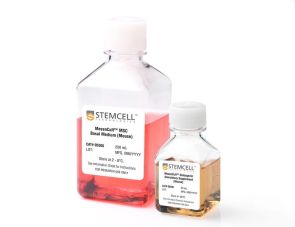
  • MesenCult™ MSC脂肪分化基础培养基(小鼠),200 mL
  • MesenCult™ 脂肪分化 10X补充剂(小鼠),22 mL
专为您的实验方案打造的产品
要查看实验方案所需的所有配套产品,请参阅《实验方案与技术文档》

总览

MesenCult™ 脂肪分化试剂盒 (小鼠) 专门用于小鼠间充质干细胞或祖细胞(MSCs),小鼠脂肪组织来源的MSCs (ADSCs)和小鼠胚胎成纤维细胞(MEFs)体外分化成脂肪生成谱系的细胞。

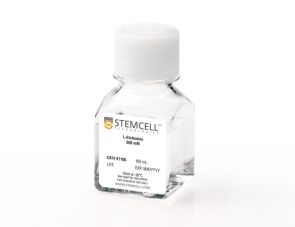
注意:MesenCult™ 脂肪分化试剂盒 (小鼠)必须补充 L-谷氨酰胺(产品号 #07100)。

分类
专用培养基
 
细胞类型
间充质干/祖细胞
 
种属
小鼠
 
应用
分化
 
品牌
MesenCult
 
研究领域
药物发现和毒性检测,干细胞生物学
 

产品说明书及文档

请在《产品说明书》中查找相关支持信息和使用说明,或浏览下方更多实验方案。

Document Type
Product Name
Catalog #
Lot #
Language
Catalog #
05507
Lot #
All
Language
English
Document Type
Safety Data Sheet 1
Catalog #
05507
Lot #
All
Language
English
Document Type
Safety Data Sheet 2
Catalog #
05507
Lot #
All
Language
English

应用领域

本产品专为以下研究领域设计,适用于工作流程中的高亮阶段。探索这些工作流程,了解更多我们为各研究领域提供的其他配套产品。

相关材料与文献

技术资料 (3)

文献 (5)

IL-33-mediated mast cell activation promotes gastric cancer through macrophage mobilization. M. F. Eissmann et al. Nature communications 2019

Abstract

The contribution of mast cells in the microenvironment of solid malignancies remains controversial. Here we functionally assess the impact of tumor-adjacent,submucosal mast cell accumulation in murine and human intestinal-type gastric cancer. We find that genetic ablation or therapeutic inactivation of mast cells suppresses accumulation of tumor-associated macrophages,reduces tumor cell proliferation and angiogenesis,and diminishes tumor burden. Mast cells are activated by interleukin (IL)-33,an alarmin produced by the tumor epithelium in response to the inflammatory cytokine IL-11,which is required for the growth of gastric cancers in mice. Accordingly,ablation of the cognate IL-33 receptor St2 limits tumor growth,and reduces mast cell-dependent production and release of the macrophage-attracting factors Csf2,Ccl3,and Il6. Conversely,genetic or therapeutic macrophage depletion reduces tumor burden without affecting mast cell abundance. Therefore,tumor-derived IL-33 sustains a mast cell and macrophage-dependent signaling cascade that is amenable for the treatment of gastric cancer.
Aligned fibrous decellularized cell derived matrices for mesenchymal stem cell amplification. M. Ventre et al. Journal of biomedical materials research. Part A 2019 jul

Abstract

Biochemical and biophysical stimuli of stem cell niches finely regulate the self-renewal/differentiation equilibrium. Replicating this in vitro is technically challenging,making the control of stem cell functions difficult. Cell derived matrices capture certain aspect of niches that influence fate decisions. Here,aligned fibrous matrices synthesized by MC3T3 cells were produced and the role of matrix orientation and stiffness on the maintenance of stem cell characteristics and adipo- or osteo-genic differentiation of murine mesenchymal stem cells (mMSCs) was investigated. Decellularized matrices promoted mMSC proliferation. Fibrillar alignment and matrix stiffness work in concert in defining cell fate. Soft matrices preserve stemness,whereas stiff ones,in presence of biochemical supplements,promptly induce differentiation. Matrix alignment impacts the homogeneity of the cell population,that is,soft aligned matrices ameliorate the spontaneous adipogenic differentiation,whereas stiff aligned matrices reduce cross-differentiation. We infer that mechanical signaling is a dominant factor in mMSC fate decision and the matrix alignment contributes to produce a more homogeneous environment,which results in a uniform response of cells to biophysical environment. Matrix thus produced can be obtained in vitro in a facile and consistent manner and can be used for homogeneous stem cell amplification or for mechanotransduction-related studies.
Machine Learning to Quantitate Neutrophil NETosis. L. Elsherif et al. Scientific reports 2019 nov

Abstract

We introduce machine learning (ML) to perform classification and quantitation of images of nuclei from human blood neutrophils. Here we assessed the use of convolutional neural networks (CNNs) using free,open source software to accurately quantitate neutrophil NETosis,a recently discovered process involved in multiple human diseases. CNNs achieved {\textgreater}94{\%} in performance accuracy in differentiating NETotic from non-NETotic cells and vastly facilitated dose-response analysis and screening of the NETotic response in neutrophils from patients. Using only features learned from nuclear morphology,CNNs can distinguish between NETosis and necrosis and between distinct NETosis signaling pathways,making them a precise tool for NETosis detection. Furthermore,by using CNNs and tools to determine object dispersion,we uncovered differences in NETotic nuclei clustering between major NETosis pathways that is useful in understanding NETosis signaling events. Our study also shows that neutrophils from patients with sickle cell disease were unresponsive to one of two major NETosis pathways. Thus,we demonstrate the design,performance,and implementation of ML tools for rapid quantitative and qualitative cell analysis in basic science.

更多信息

更多信息
物种 小鼠
质量保证:

产品仅供研究使用,不用于针对人或动物的诊断或治疗。 欲获悉更多关于STEMCELL的质控信息,请访问 STEMCELL.CN/COMPLIANCE.
Copyright © 2026 by STEMCELL Technologies. All rights reserved.

在线联系