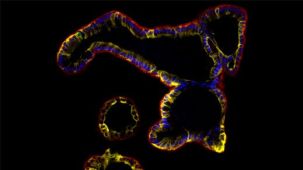
Organoids have truly expanded the limits of what's possible for in vitro studies of the intestinal epithelium. By providing optimized culture media and robust, approachable protocols, we are making these technologies more accessible to researchers.

Ryan ConderAssociate Director, Gastrointestinal Biology
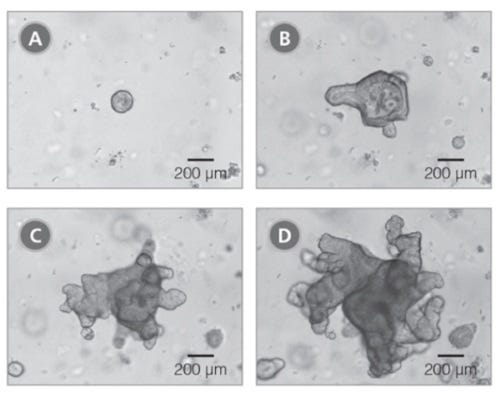
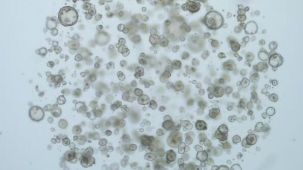
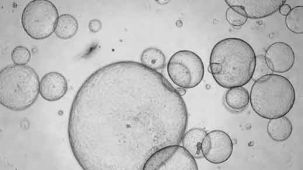
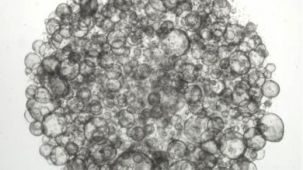
Figure 1. Primary Organoids Grown in IntestiCult™ Organoid Growth Medium (Human) are Fully Mature After 10-14 Days in Culture
Primary organoids were cultured from human colonic biopsy samples and grown in IntestiCult Organoid Growth Medium (Human). Organoids were imaged after (A) two days, (B) six days, (C) eight days and (D) ten days growth.
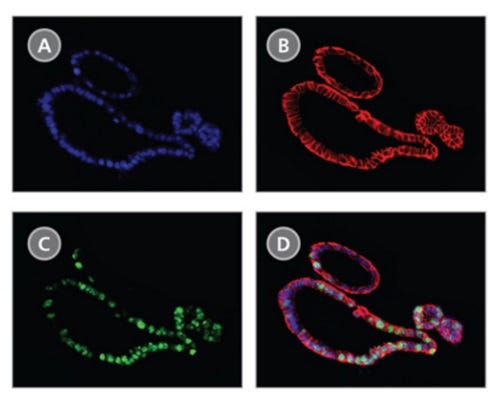
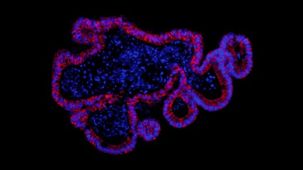
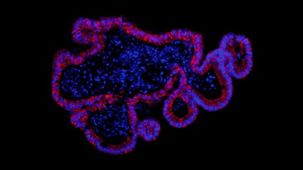
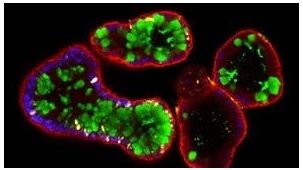
Figure 2. Organoids Grown in IntestiCult™ Organoid Growth Medium (Human) Display Markers of Human Intestinal Epithelial Cells
Immunofluorescence of organoids grown in IntestiCult™ Organoid Growth Medium (Human) showing colocalization of (A) DAPI, (B) EPCAM and (C) Ki67. (D) A merged image shows the position of actively proliferating (Ki67+) intestinal stem cells within the epithelial layer (EPCAM+).
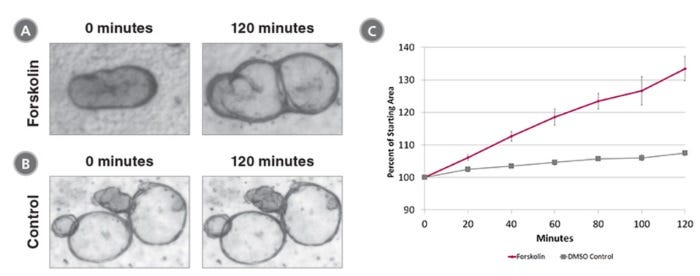
Figure 3. Forskolin-Induced Swelling of Organoids Grown in IntestiCult™ Organoid Growth Medium (Human)
Organoids were treated with (A) 5 μM Forskolin or (B) DMSO and organoid area was measured at 0 minutes and 120 minutes. (C)Forskolin-treated organoids increased in size 33.5 ± 3.8% compared to 7.5 ± 0.8% for DMSO-treated organoids.
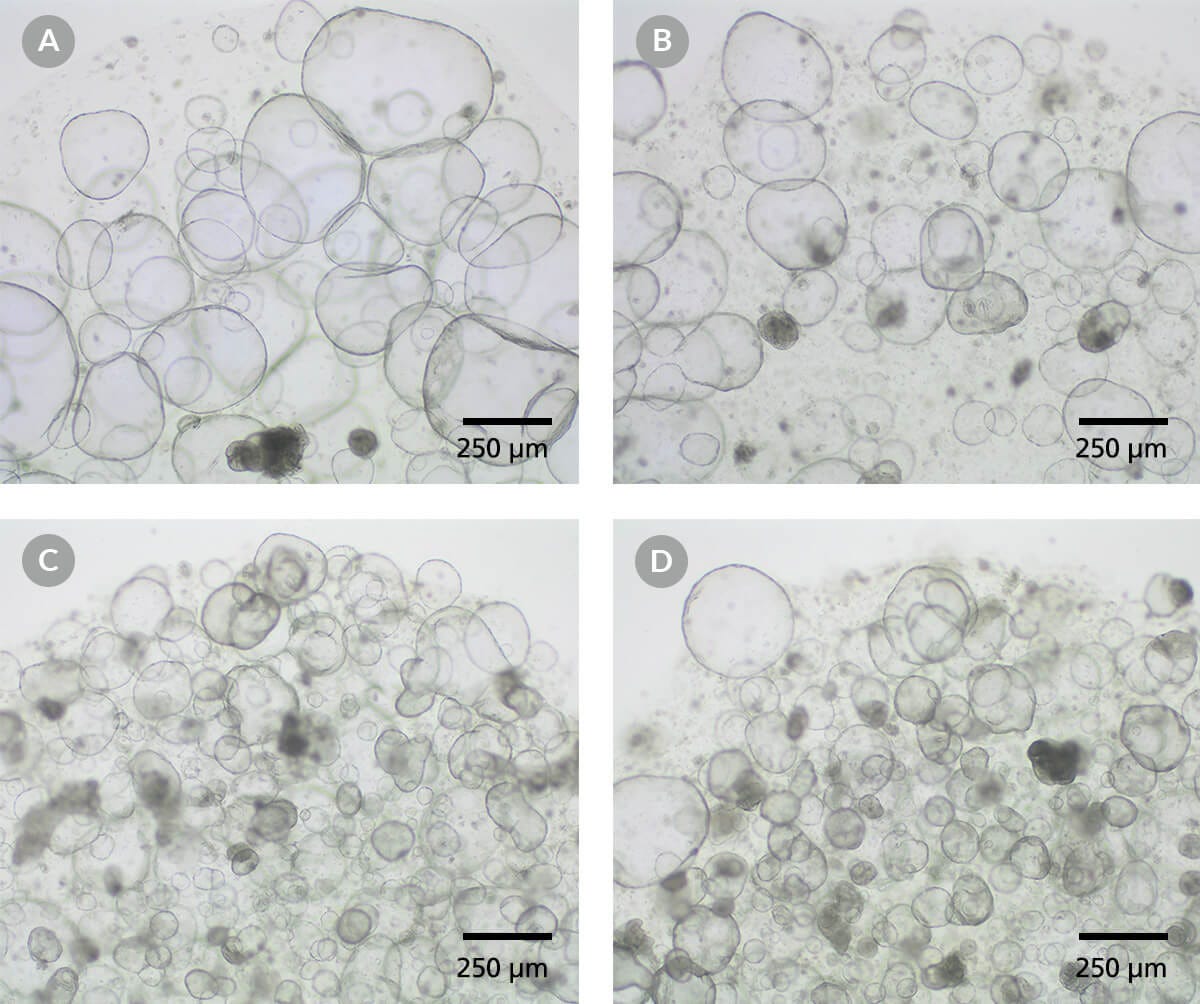
Figure 4. IntestiCult™ Organoid Growth Medium (Human) Supports the Growth of Organoids in Multiple Extracellular Matrices
Intestinal organoid cultures were prepared in IntestiCult™ Organoid Growth Medium (Human) and plated in (A) Matrigel® Growth Factor Reduced Basement Membrane Matrix (Corning® catalog # 356231), (B) Geltrex® LDEV-Free Reduced Growth Factor Basement Membrane Matrix (Gibco™ catalog # A1413202), (C) Cultrex® Reduced Growth Factor Basement Membrane Extract, Type 1 (R&D Systems™ catalog # 3433-005-R1), and (D) Cultrex® Reduced Growth Factor Basement Membrane Extract, Type 2 (R&D Systems™ catalog # 3533-005-02). Organoid cultures are imaged at the end of passage 4. All four extracellular matrices supported robust growth of human intestinal organoids. Scale bars = 250 μm.
Figure 5. The MIMETAS OrganoReady® Colon Organoid Platform Uses IntestiCult™ to Create an Advanced Physiologically Relevant Model for Gastrointestinal Toxicity Testing and Barrier Integrity
(A) The OrganoReady® plate highlighting the microfluidic compartments.
(B) Schematic of the OrganoReady® microfluidic compartments where columns 1, 2, and 3 house the medium, a collagen-1 matrix, and the colon organoid tubule, respectively.
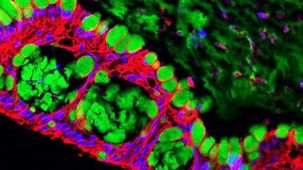
(C) Immunofluorescence staining of the colon organoid tubule confirms an adult tissue phenotype with the presence of goblet cells (Muc2), enterocytes (Occludin), and stem cells (Sox9). The 3D-lumenized structure provides apical (Ezrin) and basolateral (Integrin-β4) access to the polarized epithelium. Additionally, the organoid tubules show polarized and modulatable activity of expression of P-glycoprotein (Pgp).
(D) The OrganoReady® Colon Organoid platform supports toxicity testing, as demonstrated by dose-dependent measurements of TEER, LDH, and ATP following exposure to Afatinib (n = 4, N = 2). After 72 hrs of exposure, a dose dependent decrease in TEER, cytotoxicity, and cell viability was observed. For more information, please visit mimetas.com/en/organoready-organoid/.
Interferon gamma decreases intestinal epithelial aquaporin 3 expression through downregulation of constitutive transcription. M. A. Peplowski et al.
Journal of molecular medicine (Berlin,Germany) 2018 oct
Abstract
Aquaporin (AQP) 3 expression is altered in inflammatory bowel diseases,although the exact mechanisms regulating AQP abundance are unclear. Although interferon gamma (IFNgamma) is centrally involved in intestinal inflammation,the effect of this cytokine on AQP3 expression remains unknown. HT-29 human colonic epithelial cells were treated with IFNgamma to assess AQP3 mRNA expression by real-time RT-PCR and functional protein expression through the uptake of radiolabelled glycerol. Transient knockdown of signal transducer and activator of transcription 1 (STAT1),STAT3,Sp1,and Sp3 were performed to determine the involvement of these transcription factors in the IFNgamma-induced signalling cascade. AQP3 promoter regions involved in the response to IFNgamma were assessed using a luciferase reporter system. Likewise,enteroids derived from human colonic biopsies were also treated with IFNgamma to assess for changes in AQP3 mRNA expression. IFNgamma decreased AQP3 mRNA expression in HT-29 cells in a time- and concentration-dependent manner and reduced functional AQP3 protein expression (decreased 3H-labelled glycerol uptake). IFNgamma also reduced AQP3 expression in enteroids derived from human colonic biopsies. Knockdown of STAT1 partially prevented the IFNgamma-induced downregulation of AQP3 expression,whereas STAT3 and Sp3 knockdowns resulted in increased baseline expression of AQP3 but did not alter IFNgamma-induced downregulation. Constitutive transcription of AQP3 is downregulated by IFNgamma as demonstrated using the luciferase reporter system,with Sp3 bound to the AQP3 promoter as shown by chromatin immunoprecipitation. AQP3 constitutive transcription in intestinal epithelial cells is downregulated by IFNgamma. This response requires STAT1 that is postulated to drive the downregulation of AQP3 expression through increased acetylation or decreased deacetylation the AQP3 promoter,ultimately resulting in decreased constitutive transcription of AQP3. KEY MESSAGES • IFNgamma suppresses the expression of AQP3 in intestinal epithelial cells. • Proximal AQP3 promoter elements are sufficient to drive constitutive expression and mediate the IFNgamma-induced downregulation of AQP3 mRNA expression. • IFNgamma-induced suppression of AQP3 is dependent upon STAT1 expression,but not STAT3,Sp1,or Sp3.
NOX1-derived ROS drive the expression of Lipocalin-2 in colonic epithelial cells in inflammatory conditions. N. Makhezer et al.
Mucosal immunology 2019 jan
Abstract
Inflammatory bowel disease (IBD) is characterized by severe and recurrent inflammation of the gastrointestinal tract,associated with altered patterns of cytokine synthesis,excessive reactive oxygen species (ROS) production,and high levels of the innate immune protein,lipocalin-2 (LCN-2),in the mucosa. The major source of ROS in intestinal epithelial cells is the NADPH oxidase NOX1,which consists of the transmembrane proteins,NOX1 and p22PHOX,and the cytosolic proteins,NOXO1,NOXA1,and Rac1. Here,we investigated whether NOX1 activation and ROS production induced by key inflammatory cytokines in IBD causally affects LCN-2 production in colonic epithelial cells. We found that the combination of TNFalpha and IL-17 induced a dramatic upregulation of NOXO1 expression that was dependent on the activation of p38MAPK and JNK1/2,and resulted into an increase of NOX1 activity and ROS production. NOX1-derived ROS drive the expression of LCN-2 by controlling the expression of IkappaBzeta,a master inducer of LCN-2. Furthermore,LCN-2 production and colon damage were decreased in NOX1-deficient mice during TNBS-induced colitis. Finally,analyses of biopsies from patients with Crohn's disease showed increased JNK1/2 activation,and NOXO1 and LCN-2 expression. Therefore,NOX1 might play a key role in mucosal immunity and inflammation by controlling LCN-2 expression.
Human Milk Oligosaccharides Increase Mucin Expression in Experimental Necrotizing Enterocolitis. R. Y. Wu et al.
Molecular nutrition food research 2019 nov
Abstract
SCOPE Necrotizing enterocolitis (NEC) is a leading cause of morbidity and death in preterm infants,occurring more often in formula-fed than breastfed infants. Studies in both rats and humans show that human milk oligosaccharides (HMOs) lower the incidence of NEC,but the mechanism underlying such protection is currently unclear. METHODS AND RESULTS By extracting HMOs from pooled human breastmilk,the impact of HMOs on the intestinal mucin levels in a murine model of NEC are investigated. To confirm the results,the findings are validated by exposing human intestinal epithelial cells and intestinal organoids to HMOs and evaluated for mucin expression. HMO-gavage to pups increases Muc2 levels and decreases intestinal permeability to macromolecular dextran. HMO-treated cells have increased Muc2 expression,decreased bacterial attachment and dextran permeability during challenge by enteric pathogens. To identify the mediators involved in HMO induction of mucins,it is demonstrated that HMOs directly induce the expression of chaperone proteins including protein disulfide isomerase (PDI). Suppression of PDI activity removes the protective effects of HMOs on barrier function in vitro as well as NEC protection in vivo. CONCLUSIONS Taken together,the results provide insights to the possible mechanisms by which HMOs protect the neonatal intestine through upregulation of mucins.
Thank you for your interest in IntestiCult™ Organoid Growth Medium (Human). Please provide us with your contact information and your local representative will contact you with a customized quote. Where appropriate, they
can also assist you with a(n):
Estimated delivery time for your area
Product sample or exclusive offer
In-lab demonstration
By submitting this form, you are providing your consent to STEMCELL Technologies Canada Inc. and its subsidiaries and affiliates (“STEMCELL”) to collect and use your information, and send you newsletters and emails in accordance with our
privacy policy. Please contact us with any questions that you may have. You can unsubscribe or change your email preferences at any time.
This product was developed under a license to intellectual property owned by Hubrecht Organoid Technology (HUB). This product is sold for research use only. Purchase of this product does not include the right to use it for drug screening aiming for commercial gain, equipment validation, biobanking, or for other commercial purposes. Purchasers wishing to use the product for purposes other than basic research use should contact HUB at www.huborganoids.nl to obtain a further license. Purchasers may apply for a License from HUB, which will not be unreasonably withheld by HUB. 质量保证: