若您需要咨询产品或有任何技术问题,请通过官方电话 400 885 9050 或邮箱 info.cn@stemcell.com 与我们联系。

hPSC基因检测试剂盒

用于检测人胚胎干细胞(hESCs)和诱导多能干细胞(iPSCs)中大多数核型异常的 qPCR 分析试剂盒。

只有 %1
¥4,040.00

产品号 #(选择产品)

产品号 #07550_C

qPCR 分析试剂盒,用于检测人胚胎干细胞(ES)和诱导多能干细胞(iPS)中多数已报道的核型异常。

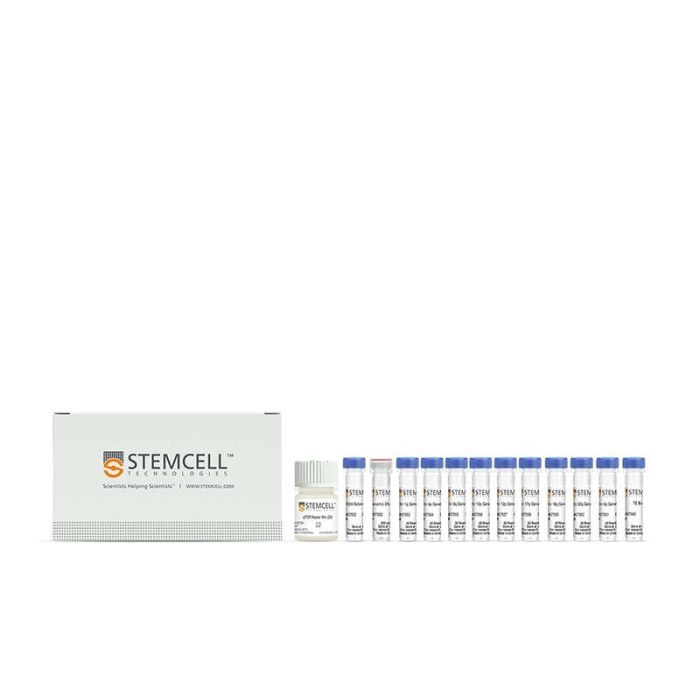
产品组分包括

  • qPCR Master Mix (2X), 3 mL
  • ROX参比染料, 0.2 mL
  • Chr 1q 基因检测试剂, 60次反应量(Rxn)
  • Chr 4p 基因检测试剂, 60次反应量(Rxn)
  • Chr 8q 基因检测试剂, 60次反应量(Rxn)
  • Chr 10p 基因检测试剂, 60次反应量(Rxn)
  • Chr 12p 基因检测试剂, 60次反应量(Rxn)
  • Chr 17q 基因检测试剂, 60次反应量(Rxn)
  • Chr 18q 基因检测试剂, 60次反应量(Rxn)
  • Chr 20q 基因检测试剂, 60次反应量(Rxn)
  • Chr Xp 基因检测试剂, 60次反应量(Rxn)
  • 基因组DNA对照, 15 µL
  • TE缓冲液, 1 mL
专为您的实验方案打造的产品
要查看实验方案所需的所有配套产品,请参阅《实验方案与技术文档》

总览

快速且经济地检测人多能干细胞(hPSCs)中最常见的8种核型异常。

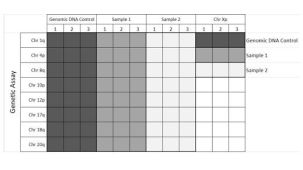
本qPCR试剂盒可对多条hPSC细胞系进行遗传筛查,提供足够的材料用于最多18个样本和2个对照(三重复)分析,包括对照DNA。该试剂盒采用双淬灭探针,使用5-羧基荧光素(5-FAM)染料,性能优于单淬灭探针。内容包括qPCR主混合液、ROX参考染料、缓冲液,以及用于检测8个常见突变区域关键最小区域的引物/探针混合物和一个基因组对照引物/探针混合物。另附带在目标区域具有正常拷贝数的基因组DNA对照。

结果可输入在线Genetic Analysis App进行统计分析、数据解释与可视化。


细胞类型
多能干细胞
 
种属

 
应用
基因组编辑
 
研究领域
疾病建模,干细胞生物学
 

实验数据

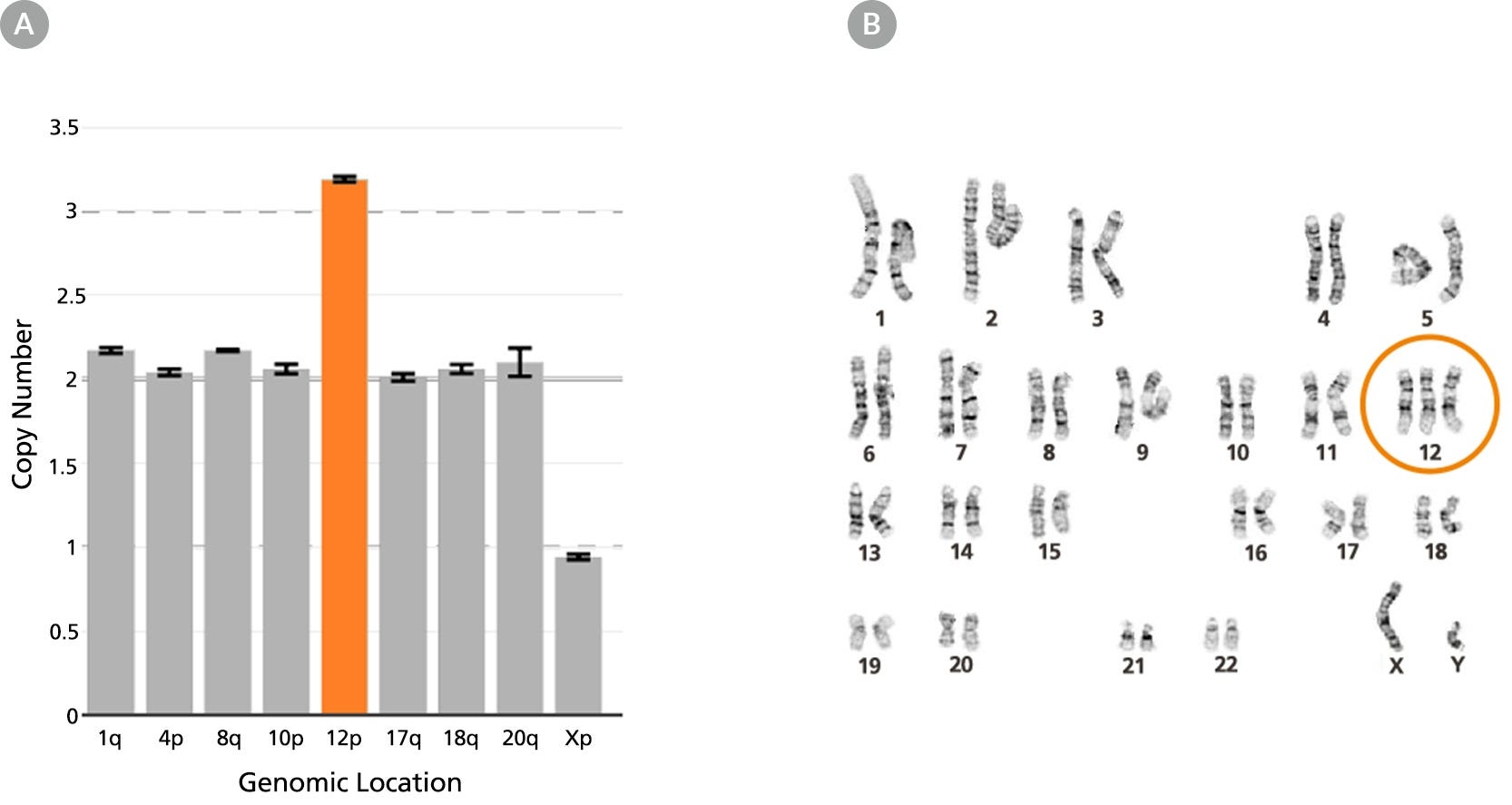
Figure 1. The hPSC Genetic Analysis Kit Identifies Chromosome 12 Trisomy

Chromosome 12 trisomy in WLS-1C human iPS cell line is (A) detected using the hPSC Genetic Analysis Kit (orange bar) and (B) confirmed by G-banding.

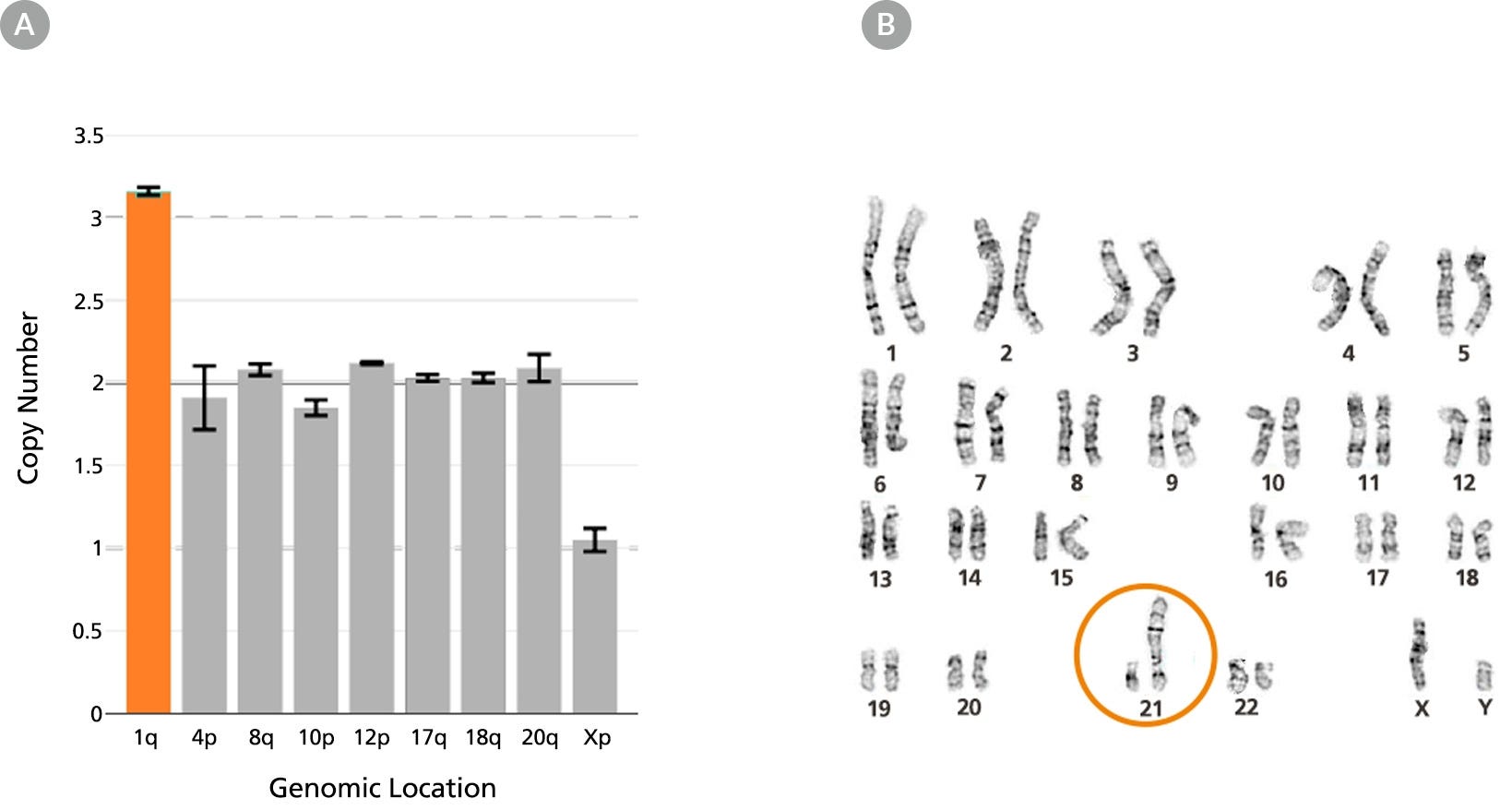
Figure 2. The hPSC Genetic Analysis Kit Identifies Chromosome 1 Duplication via Unbalanced Translocation

Unbalanced rearrangement of chromosome 1 in the WLS-1C human iPS cell line in which an extra copy of the long (q) arm of chromosome 1 translocated to the short arm (p) of chromosome 21 was (A) detected using the hPSC Genetic Analysis Kit (orange bar) and (B) confirmed by G-banding.

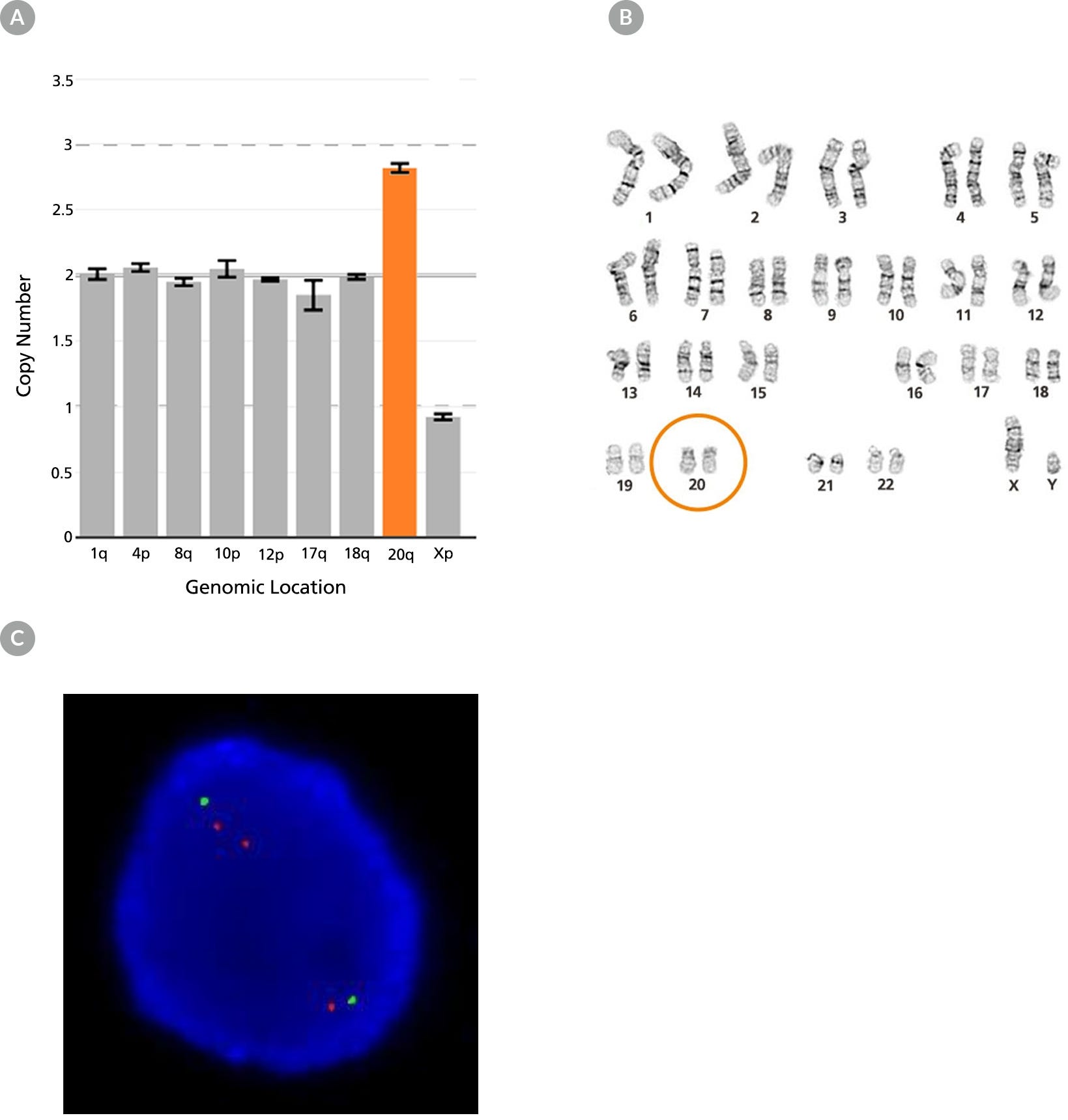
Figure 3. The hPSC Genetic Analysis Kit Identifies Chromosome 20q11.21 Duplication

Chromosome 20q duplication in WLS-1C human iPS cell line is (A) detected using the hPSC Genetic Analysis Kit (orange bar), (B) undetected by G-banding, and (C) confirmed by fluorescent in situ hybridization using probes for 20p11 (green) and 20q11.21 (red).

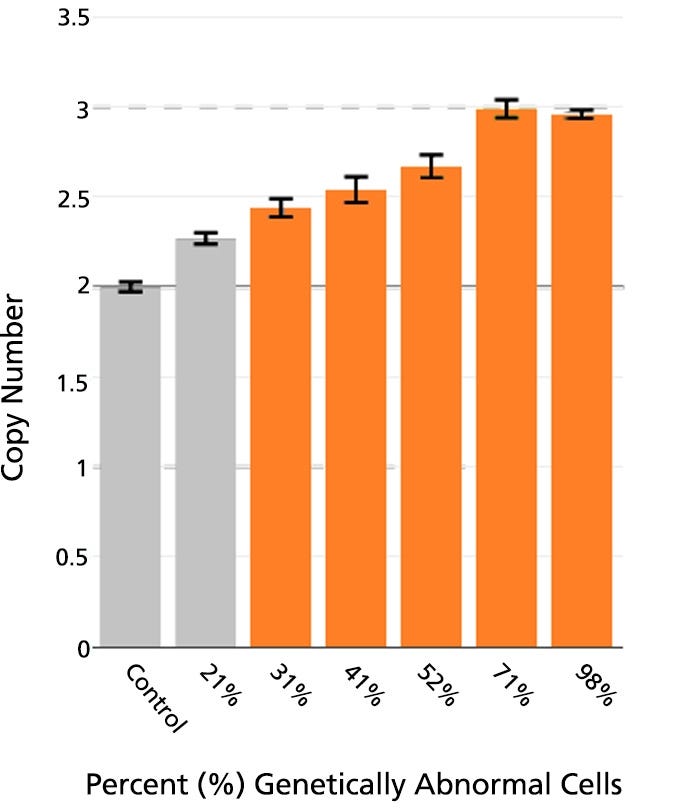
Figure 4. The hPSC Genetic Analysis Kit Identifies Abnormalities in Cultures with Approximately 30% Mosaicism

Genetically normal WLS-1C human iPS cells were mixed in the indicated ratios with WLS-1C human iPS cells containing a chromosome 20q duplication. Cultures with approximately 30% genetically abnormal cells exhibit a significantly enriched population of 20q11.21 duplication (orange bars).

产品说明书及文档

请在《产品说明书》中查找相关支持信息和使用说明,或浏览下方更多实验方案。

Document Type
Product Name
Catalog #
Lot #
Language
Catalog #
07550
Lot #
All
Language
English
Document Type
Safety Data Sheet 1
Catalog #
07550
Lot #
All
Language
English
Document Type
Safety Data Sheet 2
Catalog #
07550
Lot #
All
Language
English
Document Type
Safety Data Sheet 3
Catalog #
07550
Lot #
All
Language
English
Document Type
Safety Data Sheet 4
Catalog #
07550
Lot #
All
Language
English
Document Type
Safety Data Sheet 5
Catalog #
07550
Lot #
All
Language
English
Document Type
Safety Data Sheet 6
Catalog #
07550
Lot #
All
Language
English
Document Type
Safety Data Sheet 7
Catalog #
07550
Lot #
All
Language
English
Document Type
Safety Data Sheet 8
Catalog #
07550
Lot #
All
Language
English
Document Type
Safety Data Sheet 9
Catalog #
07550
Lot #
All
Language
English
Catalog #
07550
Lot #
All
Language
English
Catalog #
07550
Lot #
All
Language
English
Catalog #
07550
Lot #
All
Language
English
Catalog #
07550
Lot #
All
Language
English

应用领域

本产品专为以下研究领域设计,适用于工作流程中的高亮阶段。探索这些工作流程,了解更多我们为各研究领域提供的其他配套产品。

相关材料与文献

技术资料 (38)

文献 (17)

Homozygous ALS-linked mutations in TARDBP/TDP-43 lead to hypoactivity and synaptic abnormalities in human iPSC-derived motor neurons iScience 2024 Feb

Abstract

SummaryCytoplasmic mislocalization and aggregation of the RNA-binding protein TDP-43 is a pathological hallmark of the motor neuron (MN) disease amyotrophic lateral sclerosis (ALS). Furthermore,while mutations in TARDBP (encoding TDP-43) have been associated with ALS,the pathogenic consequences of these mutations remain poorly understood. Using CRISPR-Cas9,we engineered two homozygous knock-in induced pluripotent stem cell lines carrying mutations in TARDBP encoding TDP-43A382T and TDP-43G348C,two common yet understudied ALS TDP-43 variants. Motor neurons (MNs) differentiated from knock-in iPSCs had normal viability and displayed no significant changes in TDP-43 subcellular localization,phosphorylation,solubility,or aggregation compared with isogenic control MNs. However,our results highlight synaptic impairments in both TDP-43A382T and TDP-43G348C MN cultures,as reflected in synapse abnormalities and alterations in spontaneous neuronal activity. Collectively,our findings suggest that MN dysfunction may precede the occurrence of TDP-43 pathology and neurodegeneration in ALS and further implicate synaptic and excitability defects in the pathobiology of this disease. Graphical abstract Highlights•Mutant MNs maintain viability but are more vulnerable to cellular stress•Mutant MNs do not show TDP-43 pathology•TDP-43 variants lead to a progressive decline in spontaneous neuronal activity•Functional impairments are accompanied by abnormal synaptic marker expression Molecular neuroscience; Cellular neuroscience
Reduction of Filamin C Results in Altered Proteostasis, Cardiomyopathy, and Arrhythmias J. Ohiri et al. Journal of the American Heart Association: Cardiovascular and Cerebrovascular Disease 2024 May

Abstract

BackgroundMany cardiomyopathy‐associated FLNC pathogenic variants are heterozygous truncations,and FLNC pathogenic variants are associated with arrhythmias. Arrhythmia triggers in filaminopathy are incompletely understood.Methods and ResultsWe describe an individual with biallelic FLNC pathogenic variants,p.Arg650X and c.970‐4A>G,with peripartum cardiomyopathy and ventricular arrhythmias. We also describe clinical findings in probands with FLNC variants including Val2715fs87X,Glu2458Serfs71X,Phe106Leu,and c.970‐4A>G with hypertrophic and dilated cardiomyopathy,atrial fibrillation,and ventricular tachycardia. Induced pluripotent stem cell‐derived cardiomyocytes (iPSC‐CMs) were generated. The FLNC truncation,Arg650X/c.970‐4A>G,showed a marked reduction in filamin C protein consistent with biallelic loss of function mutations. To assess loss of filamin C,gene editing of a healthy control iPSC line was used to generate a homozygous FLNC disruption in the actin binding domain. Because filamin C has been linked to protein quality control,we assessed the necessity of filamin C in iPSC‐CMs for response to the proteasome inhibitor bortezomib. After exposure to low‐dose bortezomib,FLNC‐null iPSC‐CMs showed an increase in the chaperone proteins BAG3,HSP70 (heat shock protein 70),and HSPB8 (small heat shock protein B8) and in the autophagy marker LC3I/II. FLNC null iPSC‐CMs had prolonged electric field potential,which was further prolonged in the presence of low‐dose bortezomib. FLNC null engineered heart tissues had impaired function after low‐dose bortezomib.Conclusions FLNC pathogenic variants associate with a predisposition to arrhythmias,which can be modeled in iPSC‐CMs. Reduction of filamin C prolonged field potential,a surrogate for action potential,and with bortezomib‐induced proteasome inhibition,reduced filamin C led to greater arrhythmia potential and impaired function.
ATP1A3 regulates protein synthesis for mitochondrial stability under heat stress F. Fujii et al. Disease Models & Mechanisms 2024 Jul

Abstract

ABSTRACTPathogenic variants in ATP1A3,the gene encoding the α3 subunit of the Na+/K+-ATPase,cause alternating hemiplegia of childhood (AHC) and related disorders. Impairments in Na+/K+-ATPase activity are associated with the clinical phenotype. However,it remains unclear whether additional mechanisms are involved in the exaggerated symptoms under stressed conditions in patients with AHC. We herein report that the intracellular loop (ICL) of ATP1A3 interacted with RNA-binding proteins,such as Eif4g (encoded by Eif4g1),Pabpc1 and Fmrp (encoded by Fmr1),in mouse Neuro2a cells. Both the siRNA-mediated depletion of Atp1a3 and ectopic expression of the p.R756C variant of human ATP1A3-ICL in Neuro2a cells resulted in excessive phosphorylation of ribosomal protein S6 (encoded by Rps6) and increased susceptibility to heat stress. In agreement with these findings,induced pluripotent stem cells (iPSCs) from a patient with the p.R756C variant were more vulnerable to heat stress than control iPSCs. Neurons established from the patient-derived iPSCs showed lower calcium influxes in responses to stimulation with ATP than those in control iPSCs. These data indicate that inefficient protein synthesis contributes to the progressive and deteriorating phenotypes in patients with the p.R756C variant among a variety of ATP1A3-related disorders. Summary: Pathogenic variants in ATP1A3 cause alternating hemiplegia of childhood and related disorders. ATP1A3 supports the expression of heat shock proteins,thereby protecting cells from mitochondrial instability under heat stress.

更多信息

更多信息
物种

质量保证:

本产品仅供科研使用,除非另有说明,不得用于人体或动物的诊断或治疗用途。如需了解 STEMCELL 的质量体系,请访问 STEMCELL.CN/COMPLIANCE.

Copyright © 2026 by STEMCELL Technologies. All rights reserved.

在线联系