若您需要咨询产品或有任何技术问题,请通过官方电话 400 885 9050 或邮箱 info.cn@stemcell.com 与我们联系。

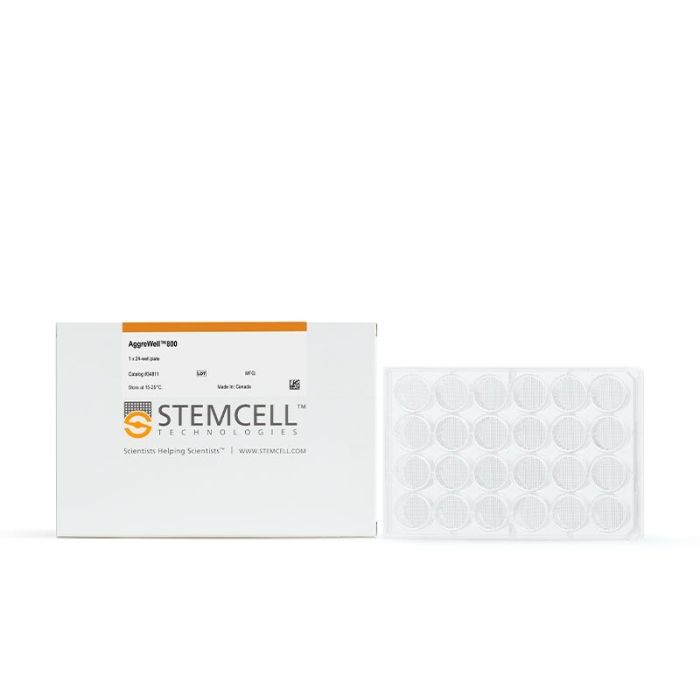
AggreWell™ 800

简单可重复性地制备拟胚体和球体的微孔培养板
只有 %1
¥1,016.00

产品号 #(选择产品)

产品号 #34811_C

简单可重复性地制备拟胚体和球体的微孔培养板

产品组分包括

  • AggreWell™ 800 24孔板
    • 1块(产品号#34811)
    • 5块(产品号#34815)
  • AggreWell™ 800 6孔板
    • 1块(产品号#34821)
    • 5块(产品号#34825)
  • AggreWell™ 800 24孔板套装(产品号#34850)
    • 2 x 24孔板
    • 1瓶防粘附冲洗液(产品号#07010)
  • AggreWell™ 800 6孔板套装(产品号#34860)
    • 2 x 6孔板
    • 1瓶防粘附冲洗液(产品号#07010)
专为您的实验方案打造的产品
要查看实验方案所需的所有配套产品,请参阅《实验方案与技术文档》

总览

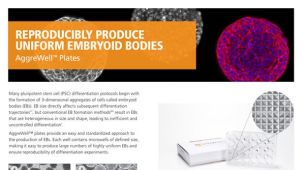
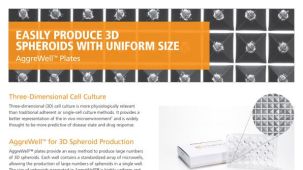
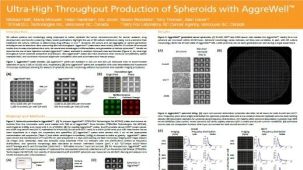
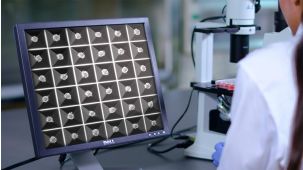
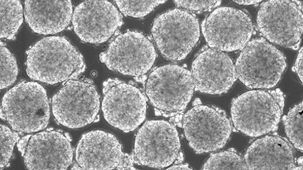
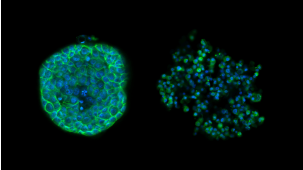
AggreWell™细胞培养板提供了一种简单、标准化的方法来生成细胞聚集体,包括拟胚体(EBs)和球体。使用AggreWell™板生成的EBs和球体在大小和形状上是均一的,并且在实验内和实验间均表现出良好的均一性。新一代改进版AggreWell™板兼容多种细胞类型,包括胚胎干细胞、诱导多能干细胞、肿瘤细胞等,其增强的光学特性确保成像清晰无杂质。注意:为获得最佳的EB和球状体形成效果,需配合使用AggreWell™抗粘附冲洗液。

有关如何选择AggreWell™产品(包括 AggreWell™ 400AggreWell™ 800 和 AggreWell™ HT),请参阅此技术窍门。了解更多关于如何使用AggreWell™的信息或联系我们获取更多资源。


分类
培养皿与培养板
 
种属
人,小鼠,非人灵长类,其他物种,大鼠
 
应用
分化,球状体培养,细胞毒性检测
 
品牌
AggreWell
 

产品说明书及文档

请在《产品说明书》中查找相关支持信息和使用说明,或浏览下方更多实验方案。

Document Type
Product Name
Catalog #
Lot #
Language
Catalog #
34825
Lot #
All
Language
English
Catalog #
34811
Lot #
All
Language
English
Catalog #
34860
Lot #
All
Language
English
Catalog #
34821
Lot #
All
Language
English
Catalog #
34815
Lot #
All
Language
English
Catalog #
34850
Lot #
All
Language
English

相关材料与文献

技术资料 (25)

文献 (56)

Properties of Neurons Derived from Induced Pluripotent Stem Cells of Gaucher Disease Type 2 Patient Fibroblasts: Potential Role in Neuropathology Sun Y et al. PLOS ONE MAR

Abstract

Gaucher disease (GD) is caused by insufficient activity of acid $\$-glucosidase (GCase) resulting from mutations in GBA1. To understand the pathogenesis of the neuronopathic GD,induced pluripotent stem cells (iPSCs) were generated from fibroblasts isolated from three GD type 2 (GD2) and 2 unaffected (normal and GD carrier) individuals. The iPSCs were converted to neural precursor cells (NPCs) which were further differentiated into neurons. Parental GD2 fibroblasts as well as iPSCs,NPCs,and neurons had similar degrees of GCase deficiency. Lipid analyses showed increases of glucosylsphingosine and glucosylceramide in the GD2 cells. In addition,GD2 neurons showed increased $\$-synuclein protein compared to control neurons. Whole cell patch-clamping of the GD2 and control iPSCs-derived neurons demonstrated excitation characteristics of neurons,but intriguingly,those from GD2 exhibited consistently less negative resting membrane potentials with various degree of reduction in action potential amplitudes,sodium and potassium currents. Culture of control neurons in the presence of the GCase inhibitor (conduritol B epoxide) recapitulated these findings,providing a functional link between decreased GCase activity in GD and abnormal neuronal electrophysiological properties. To our knowledge,this study is first to report abnormal electrophysiological properties in GD2 iPSC-derived neurons that may underlie the neuropathic phenotype in Gaucher disease.
Cell-fate determination by ubiquitin-dependent regulation of translation Werner A et al. Nature 2015 SEP

Abstract

Metazoan development depends on the accurate execution of differentiation programs that allow pluripotent stem cells to adopt specific fates. Differentiation requires changes to chromatin architecture and transcriptional networks,yet whether other regulatory events support cell-fate determination is less well understood. Here we identify the ubiquitin ligase CUL3 in complex with its vertebrate-specific substrate adaptor KBTBD8 (CUL3(KBTBD8)) as an essential regulator of human and Xenopus tropicalis neural crest specification. CUL3(KBTBD8) monoubiquitylates NOLC1 and its paralogue TCOF1,the mutation of which underlies the neurocristopathy Treacher Collins syndrome. Ubiquitylation drives formation of a TCOF1-NOLC1 platform that connects RNA polymerase I with ribosome modification enzymes and remodels the translational program of differentiating cells in favour of neural crest specification. We conclude that ubiquitin-dependent regulation of translation is an important feature of cell-fate determination.
A Novel Protocol for Directed Differentiation of C9orf72-Associated Human Induced Pluripotent Stem Cells Into Contractile Skeletal Myotubes Swartz EW et al. STEM CELLS Translational Medicine 2016 NOV

Abstract

Induced pluripotent stem cells (iPSCs) offer an unlimited resource of cells to be used for the study of underlying molecular biology of disease,therapeutic drug screening,and transplant-based regenerative medicine. However,methods for the directed differentiation of skeletal muscle for these purposes remain scarce and incomplete. Here,we present a novel,small molecule-based protocol for the generation of multinucleated skeletal myotubes using eight independent iPSC lines. Through combinatorial inhibition of phosphoinositide 3-kinase (PI3K) and glycogen synthase kinase 3β (GSK3β) with addition of bone morphogenic protein 4 (BMP4) and fibroblast growth factor 2 (FGF2),we report up to 64% conversion of iPSCs into the myogenic program by day 36 as indicated by MYOG+ cell populations. These cells began to exhibit spontaneous contractions as early as 34 days in vitro in the presence of a serum-free medium formulation. We used this protocol to obtain iPSC-derived muscle cells from frontotemporal dementia (FTD) patients harboring C9orf72 hexanucleotide repeat expansions (rGGGGCC),sporadic FTD,and unaffected controls. iPSCs derived from rGGGGCC carriers contained RNA foci but did not vary in differentiation efficiency when compared to unaffected controls nor display mislocalized TDP-43 after as many as 120 days in vitro. This study presents a rapid,efficient,and transgene-free method for generating multinucleated skeletal myotubes from iPSCs and a resource for further modeling the role of skeletal muscle in amyotrophic lateral sclerosis and other motor neuron diseases. SIGNIFICANCE Protocols to produce skeletal myotubes for disease modeling or therapy are scarce and incomplete. The present study efficiently generates functional skeletal myotubes from human induced pluripotent stem cells using a small molecule-based approach. Using this strategy,terminal myogenic induction of up to 64% in 36 days and spontaneously contractile myotubes within 34 days were achieved. Myotubes derived from patients carrying the C9orf72 repeat expansion show no change in differentiation efficiency and normal TDP-43 localization after as many as 120 days in vitro when compared to unaffected controls. This study provides an efficient,novel protocol for the generation of skeletal myotubes from human induced pluripotent stem cells that may serve as a valuable tool in drug discovery and modeling of musculoskeletal and neuromuscular diseases.

更多信息

更多信息
物种 人, 其它物种, 大鼠, 小鼠, 非人灵长类

质量声明:

产品仅供研究使用,不用于针对人或动物的诊断或治疗。 欲获悉更多关于STEMCELL的质控信息,请访问 STEMCELL.CN/COMPLIANCE.

Copyright © 2026 by STEMCELL Technologies. All rights reserved.

在线联系